Ultimate Guide to Wood Window Manufacturing Equipment in 2026?
In 2026, the wood window manufacturing industry continues to evolve. Experts suggest that advancements in technology will streamline production processes. John Smith, a renowned expert in Wood Window Manufacturing Equipment, once stated, “Innovation drives efficiency and quality in our industry.” His insight underlines the importance of modern machinery in producing high-quality wood windows.
The market for wood window manufacturing is expanding. Companies must adapt to new technologies to remain competitive. Essential equipment includes CNC machines, automated finishing systems, and precision cutting tools. Each piece of Wood Window Manufacturing Equipment plays a vital role. However, not all manufacturers embrace these changes. Some still rely on outdated machinery, which can hinder productivity.
As competition rises, businesses face pressure to innovate. Embracing new Wood Window Manufacturing Equipment will be critical. Reflecting on past practices can reveal opportunities for improvement. Failure to modernize may lead to missed growth prospects. The industry must focus on sustainability and efficiency to thrive in the rapidly changing marketplace.
Overview of Wood Window Manufacturing Equipment in 2026
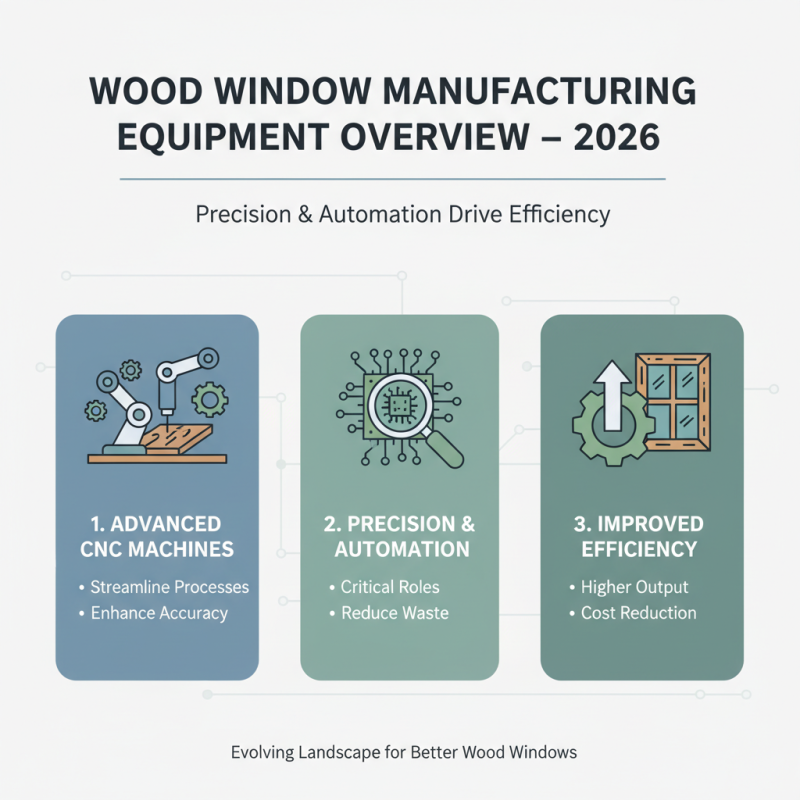
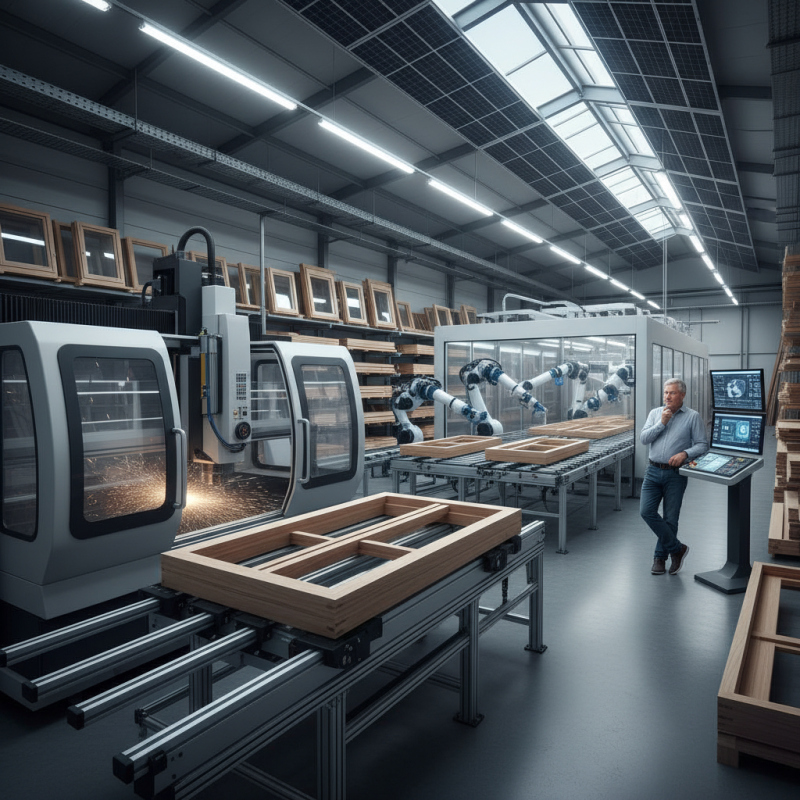
The wood window manufacturing equipment landscape is evolving rapidly. In 2026, precision and automation play critical roles. Advanced CNC machines are streamlining processes. These tools enhance accuracy and reduce waste. Ultimately, they improve overall efficiency.
Sustainability is a growing focus. New equipment often incorporates energy-efficient technologies. This shift ensures lower environmental impacts. However, companies face challenges in balancing cost and innovation. The initial investment can be daunting for many.
Training for personnel remains essential. As machines become more complex, skilled operators are necessary. Many factories struggle to find qualified workers. This gap highlights the need for ongoing education in the industry. Manufacturers must adapt to these dynamics to thrive in the competitive market.
Key Technologies Transforming Wood Window Production
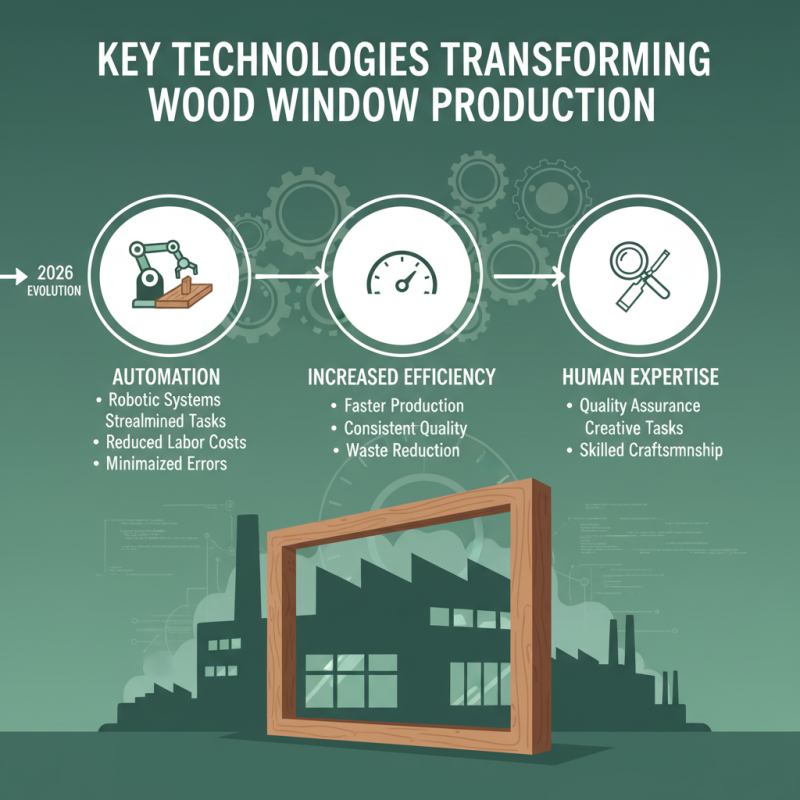
As wood window production evolves in 2026, several key technologies are emerging. Automation plays a significant role in increasing efficiency. By integrating robotic systems, manufacturers can streamline repetitive tasks. This reduces labor costs and minimizes human error during production. Workers can then focus on quality assurance and creative tasks that robots cannot perform.
Digital design software is revolutionizing how wood windows are crafted. These tools allow designers to create detailed models quickly. They can simulate various environmental conditions, predicting how windows will perform over time. This insight helps manufacturers make better decisions about materials and processes.
Sustainable practices are gaining traction as well. Using eco-friendly materials and optimizing energy consumption minimizes waste. However, not all companies are adapting at the same pace. Those hesitant to adopt these technologies may struggle with efficiency and competitiveness. As the industry progresses, reflecting on these changes is crucial for growth.
Essential Machinery for Efficient Wood Window Manufacturing
In 2026, the wood window manufacturing sector will likely see significant enhancements in machinery. Efficient and precise equipment is vital for production consistency and minimal waste. According to recent industry reports, automation in wood processing can improve efficiency by up to 30%. This is crucial for meeting growing market demands.
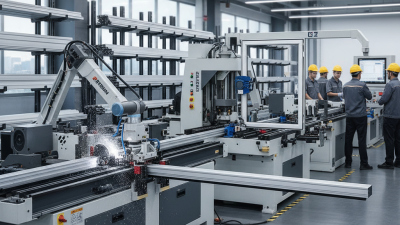
Key machinery for wood window manufacturing includes automated saws, CNC routers, and finishing systems. Automated saws ensure precise cuts, reducing material waste. CNC routers enable intricate designs, enhancing aesthetic appeal. Finishing systems provide quick and uniform application, improving product durability. However, many manufacturers still rely on outdated technologies, which can limit their production capacity.
Investing in modern machinery also poses challenges. The initial cost can be high. Training workers to operate new equipment effectively is essential. A skills gap exists, highlighting the need for ongoing employee development. As companies transition, addressing these gaps will be crucial for long-term sustainability in the wood window industry. Balancing traditional craftsmanship with modern efficiency will define success in this evolving market.
Ultimate Guide to Wood Window Manufacturing Equipment in 2026 - Essential Machinery for Efficient Wood Window Manufacturing
| Machine Type |
Purpose |
Key Features |
Efficiency (units/hr) |
Estimated Cost (USD) |
| Sawing Machine |
Cutting raw wood into panels |
High precision, adjustable speed |
300 |
$15,000 |
| Planer |
Smoothing the surfaces of wood |
Automatic feeding, dust extraction |
250 |
$12,000 |
| Joinery Machine |
Creating joints for window frames |
Flexible settings, multi-joint types |
150 |
$20,000 |
| CNC Router |
Precision cutting and shaping |
Computer-controlled, complex designs |
100 |
$50,000 |
| Sanding Machine |
Finishing wood surfaces |
Multiple sanding stations, adjustable feed rate |
200 |
$18,000 |
Trends in Eco-Friendly Wood Window Production Equipment
As the demand for eco-friendly building materials grows, the wood window manufacturing industry is shifting. In 2026, equipment designed for sustainable production will be at the forefront. This evolution includes advancements in machinery that uses energy-efficient processes. More manufacturers will harness solar energy for power. Traditional methods are being re-examined in light of new innovations.
Recycling wood scraps into new products is gaining traction. Many manufacturers are exploring ways to minimize waste. Some are investing in smarter machinery with a lower carbon footprint. This shift also encourages the use of non-toxic adhesives. The trend reflects a commitment to environmental sustainability. Challenges remain, such as managing costs and maintaining efficiency.
Educating workers on eco-friendly practices is essential. Companies face hurdles in transforming their work culture. Employee resistance can slow the adoption of new technologies. Manufacturers need to balance innovation and the skill sets of their workforce. Striking this balance ensures that eco-friendly methods can thrive in production. This journey is ongoing and requires reflection and adaptability.
Trends in Eco-Friendly Wood Window Production Equipment (2026)
Future Innovations in Wood Window Manufacturing Processes
In 2026, wood window manufacturing is set for transformative changes. Innovations will enhance efficiency and sustainability. New techniques will streamline processes, reducing waste and energy consumption. Advanced machinery will integrate smart technology. This shift will enable manufacturers to monitor production in real-time. Such insights will lead to better decision-making.
Tips: Consider adopting equipment that offers modular capabilities. This flexibility can adapt to changes in design trends. Regular maintenance is crucial. Keep machines in optimal condition to avoid costly downtimes.
Furthermore, the use of eco-friendly materials is gaining traction. Manufacturers will need to rethink traditional materials. Embracing sustainable options will appeal to environmentally conscious consumers. Implementing automation will also boost productivity. However, this requires a skilled workforce. Balancing technology with human expertise presents challenges. Training programs must evolve alongside manufacturing methods to meet these needs.