
Top Mould Components Manufacturers for Global Buyers
Choosing reliable Mould Components manufacturers can shape the success of an entire production line. Small parts often control large outcomes. Guide pillars, ejector pins, slides, inserts, and cooling fittings must work together with precision. A minor dimensional error can cause flash, uneven wear, or repeated machine downtime. Global buyers therefore need more than a polished catalogue. They need evidence.
This guide introduces leading Mould Components manufacturers serving international markets. It considers material grades, machining accuracy, heat treatment, surface finish, delivery capability, and technical support. Practical experience matters here. A supplier may claim tight tolerances, yet sample inspection should confirm them. Ask for inspection reports, production references, and clear drawings before approving large orders. Communication also deserves attention, especially when specifications cross languages and time zones. It can prevent costly assumptions.
Quality is not always visible.
Established manufacturers often use controlled processes, documented testing, and traceable batches. Many also support custom dimensions for complex mould designs. However, no supplier is perfect. Lead times may shift, coatings may vary, and catalogue data may require verification. Buyers should compare actual performance, not only price or brand recognition. A thoughtful sourcing process checks consistency across samples, replacement availability, packaging strength, and after-sales response. These details become important when a mould runs continuously under pressure. The following overview offers a practical starting point for evaluating manufacturers with greater confidence, while leaving room for independent audits and careful engineering judgment.
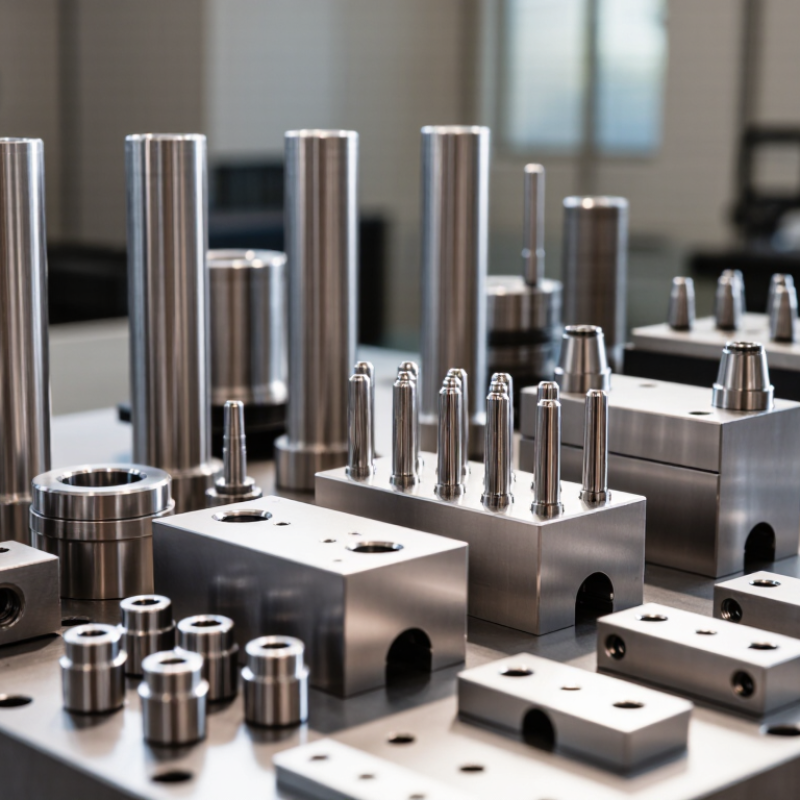
What Mould Components Manufacturers Provide to Global Buyers
Top Mould Components Manufacturers for Global Buyers
Mould components manufacturers support global buyers with more than standard pins, bushes, and plates. They provide part selection based on mould structure, production volume, material, and expected service life. Experienced suppliers can recommend hardened steel for wear areas and corrosion-resistant alloys for demanding environments. They also offer ejector systems, guide units, sliders, lifters, cooling accessories, and replacement parts. Fit matters.
Reliable manufacturers normally supply detailed drawings, dimensional tables, material data, and inspection records. These documents help engineering teams check tolerances before production begins. Some suppliers provide custom machining for non-standard components, including special lengths, hole patterns, and surface treatments. Small errors spread. A slight mismatch in a guide component can affect alignment, flash, and maintenance time.
Global buyers also expect practical export support. Manufacturers may provide protective packaging, batch identification, lead-time updates, and technical communication across time zones. Clear quality procedures are important, especially for buyers managing several moulding facilities. In my experience, a perfect first quotation is uncommon. Drawings may be incomplete, or a preferred tolerance may not suit the selected material. Good suppliers ask precise questions instead of guessing. That is useful. Buyers should still review samples, inspection data, and replacement compatibility before approving large orders. Price alone can hide machining limits, inconsistent hardness, or weak after-sales support. A manufacturer’s real value appears when components fit accurately, arrive consistently, and remain serviceable after repeated production cycles.
| Component Category | Common Products Supplied | Typical Materials | Typical Reference Tolerance | Customization Options | Documents and Services for Global Buyers | Common Applications |
|---|---|---|---|---|---|---|
| Mould Bases and Die Sets | Standard mould bases, custom base plates, cavity and core plates, support plates, spacer blocks, clamping plates | P20 pre-hardened steel, 1.2311, 1.2312, carbon steel, stainless steel for corrosion-sensitive applications | Generally specified by drawing; non-critical machined dimensions commonly use approximately ±0.05 to ±0.10 mm | Plate size, pocket layout, cooling channels, lifting holes, locating rings, support configurations and surface finish | 2D drawings, 3D CAD files, material certificates, inspection reports, packing lists and export packaging | Plastic injection moulds, die-casting dies, rubber moulds and production tooling |
| Guide Pillars and Guide Bushes | Guide pillars, guide bushes, ball-bearing guides, shoulder guides, interchangeable guide assemblies | Hardened bearing steel, tool steel, alloy steel and bronze or polymer-lined materials for selected applications | Fit and concentricity are normally controlled according to the mould drawing and selected clearance or transition fit | Diameter, length, shoulder design, lubrication grooves, flange style, coating and installation method | Dimensional inspection, hardness data, assembly recommendations and identification markings | Alignment of mould halves, precision moulds, die sets and high-cycle tooling |
| Ejector Pins and Sleeves | Ejector pins, stepped ejector pins, flat ejector pins, ejector sleeves, blade ejectors and core pins | Hardened tool steel, H13-type hot-work steel, SKD61-type steel and nitrided alloy steel | Diameter and straightness are selected according to the application; precision pin diameters are commonly controlled in the micrometre range | Diameter, length, head style, tip geometry, flat width, coating, nitriding and special end forms | Material and hardness certificates, dimensional inspection, protective packaging and replacement-part support | Plastic part ejection, die casting, insert moulding and core-pulling assemblies |
| Sprue Bushes and Locating Rings | Sprue bushes, locating rings, nozzle seats, sprue inserts and hot-runner interface components | H13-type tool steel, SKD61-type steel, hardened alloy steel and stainless steel for selected designs | Sealing, concentricity and nozzle-contact dimensions are controlled to the mould and injection-machine specifications | Sprue radius, nozzle opening, flange dimensions, hot-runner compatibility, coating and cooling provisions | Compatibility confirmation, dimensional drawings, material information and installation guidance | Cold-runner injection moulds, hot-runner moulds and thermoplastic processing tools |
| Slides, Lifters and Core-Pulling Parts | Side locks, slide cores, wear plates, angle pins, lifters, guide rails and hydraulic or mechanical core components | Pre-hardened mould steel, hardened tool steel, stainless steel and wear-resistant insert materials | Clearance and alignment depend on the mould design; sliding fits are normally specified individually on production drawings | Travel length, locking angle, wear-plate design, lubrication grooves, cooling channels and replaceable inserts | Assembly drawings, motion checks, wear-part recommendations and spare-component identification | Undercuts, side holes, snap features, threaded details and complex injection-moulded parts |
| Locks, Latches and Alignment Systems | Taper locks, straight locks, interlocks, side locks, parting-line locks and precision alignment units | Hardened alloy steel, tool steel and wear-resistant steel grades | Alignment accuracy is determined by the mould structure; contact surfaces are machined and matched to the specified fit | Locking direction, size, preload, mounting position, replaceable wear inserts and corrosion protection | Installation instructions, fit recommendations, inspection records and replacement guidance | High-precision moulds, multi-cavity moulds, thin-wall packaging moulds and die-casting dies |
| Springs and Gas-Assisted Return Parts | Die springs, return springs, compression springs, nitrogen gas springs and spring retainers | Spring steel, chrome-silicon steel and gas-spring cylinder materials suitable for repeated loading | Load, free length, installed length and allowable deflection are selected from the design calculation and supplier specification | Load rating, stroke, spring rate, colour coding, end configuration, mounting and safety retention | Load data, fatigue-life information, safety instructions and replacement schedules | Ejector return systems, die operations, stripper plates and mould opening mechanisms |
| Cooling and Temperature-Control Components | Water connectors, plugs, baffles, bubblers, cooling inserts, manifolds and sealing components | Brass, stainless steel, copper alloys, tool steel and heat-resistant sealing materials | Port and thread dimensions follow the selected connection standard; sealing performance depends on correct installation | Thread type, port size, flow direction, baffle length, cooling-channel diameter, seal material and layout | Flow-path drawings, connection specifications, pressure-test information and maintenance recommendations | Injection mould cooling, die-temperature control, hot spots and cycle-time improvement |
| Hot-Runner and Valve-Gate Components | Manifold plates, nozzles, gate inserts, valve pins, heaters, thermocouples and thermal insulation parts | Tool steel, copper alloys, nickel-based heating materials, stainless steel and high-temperature insulation materials | Gate position, nozzle fit, bore alignment and thermal interfaces are controlled according to the hot-runner design | Runner layout, gate style, material temperature range, nozzle length, valve-pin actuation and heating configuration | Wiring diagrams, temperature-control data, assembly instructions, spare-parts lists and testing records | Multi-cavity moulds, packaging, automotive parts, medical products and engineering plastics |
| Wear Plates, Inserts and Replacement Parts | Wear plates, replaceable cavity inserts, core inserts, slide inserts, bushes, shims and custom-machined repair parts | Hardened tool steel, stainless steel, carbide for selected wear applications and copper alloys for heat transfer | Replacement dimensions are normally manufactured directly from the approved drawing or inspected sample | Hardness, coating, surface texture, cooling channels, engraving, interchangeable geometry and repair allowance | Reverse-engineering support, first-article inspection, material traceability and repeat-order records | Mould maintenance, cavity repair, high-wear areas, short-run tooling and production-line spare parts |
| Surface Treatment and Finishing | Nitriding, hard chrome plating, electroless nickel plating, black oxide, polishing and precision grinding | Applied to suitable tool steels, stainless steels and alloy steels according to the required service conditions | Surface roughness and coating thickness are specified by application; values must be confirmed on the purchase drawing | Coating type, hardness, thickness, corrosion resistance, polishing grade, texture and masking areas | Coating certificates, hardness reports, surface-finish records and treatment-process confirmation | Corrosion protection, improved wear resistance, release performance and extended component service life |
| Engineering and Export Support | Design-for-manufacture review, drawing conversion, component matching, inspection, assembly assistance and spare-part planning | Based on the customer’s approved material specification, application requirements and operating conditions | Controlled through approved drawings, inspection plans, first-article reports and agreed acceptance criteria | CAD format, drawing revision control, sample approval, packaging method, labelling and shipment consolidation | Commercial invoices, packing lists, certificates of origin where applicable, export cartons and multilingual documentation | International sourcing, tooling transfer, mould refurbishment and ongoing production support |