Top Tips for Choosing Wire for Thermal Spray Applications?
Choosing the right Wire for Thermal Spray applications is crucial for achieving optimal results. The type of wire you select influences the performance, quality, and durability of the thermal spray coating. With various materials and specifications available, decision-making can be overwhelming. It's essential to understand the properties of different wires and how they align with the intended application.
Wire for thermal spray comes in different compositions, such as nickel, cobalt, and ceramic materials, each offering unique benefits. For instance, nickel-based wires provide excellent corrosion resistance, while ceramic wires excel in high-temperature applications. Not only do these characteristics affect the coating process, but they also determine the lifespan of the final product.
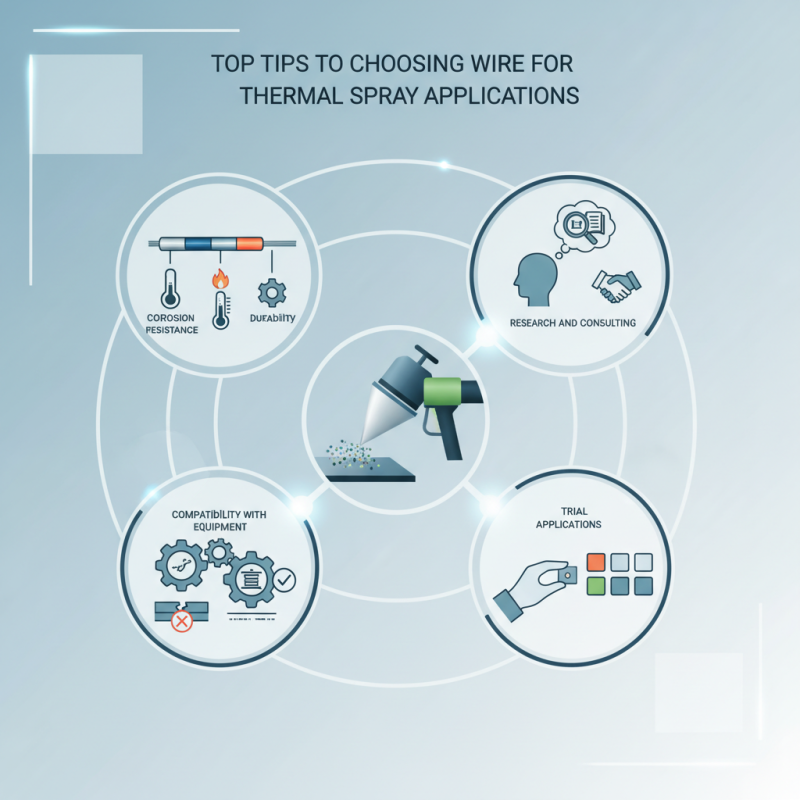
Investing time in research and consulting with experts can enhance decision-making. However, many overlook the importance of compatibility between the wire and the spray equipment. This oversight can lead to inadequate adhesion or defects in the coating. It's vital to gather insights from experienced professionals and consider trial applications to refine your choice. Understanding these nuances can help in selecting the perfect wire for thermal spray needs.
Understanding Thermal Spray Processes and Their Wire Requirements
Thermal spray processes require precise understanding of wire materials. The choice of wire can drastically affect the performance and durability of the coating. According to a recent report by the Thermal Spray Society, nearly 70% of coating failures are traced back to improper material selection.
Metal wires used in thermal spraying must possess specific properties. They must be able to withstand high temperatures without losing structural integrity. For example, nickel-based alloys are often used for their excellent oxidation resistance and mechanical strength. However, one should be cautious; not all wires labeled as nickel-based are created equal. Variability in alloy compositions can lead to unexpected performance issues.
Wire diameter also plays a crucial role. Larger diameters can enhance deposition rates but may lead to a rougher surface finish. A study from the International Thermal Spray Conference revealed that coatings with finer wires provided smoother finishes but at a slower deposition rate. This balance must be carefully considered when selecting wires for specific applications. Quality assurance and compliance with industry standards are paramount in ensuring long-term reliability.
Top Tips for Choosing Wire for Thermal Spray Applications
This chart displays the typical application suitability scores for different wire types used in thermal spray applications. A higher score indicates better suitability for specific thermal spray processes.
Material Properties: Key Factors in Selecting Wire for Thermal Spraying
When selecting wire for thermal spray applications, understanding material properties is crucial. The wire's melting point significantly impacts the spraying process. For example, high melting point materials may require specific temperatures for effective spraying. Reports indicate that materials with melting points below 1500°C are often preferred for their ease of application.
Another key factor is the wire's chemical composition. The right balance of elements can enhance wear resistance and adhesion. For instance, nickel-chromium alloys show excellent performance in corrosive environments. In fact, studies suggest that coatings made from such alloys can improve lifecycle durability by up to 30%.
Finally, the wire’s morphology, including diameter and surface finish, should not be overlooked. Finer wires tend to produce a smoother finish but may require more precise spraying methods. It’s essential to experiment with different wire types to determine the optimal setup for specific applications. Each choice impacts performance, illustrating the need for careful consideration in every step.
Wire Composition: Exploring Alloys for Enhanced Coating Performance
When selecting wire for thermal spray applications, the alloy composition is critical. Various alloys offer different properties, affecting the final coating’s performance. For instance, data indicates that chromium-based alloys enhance wear resistance, while nickel alloys are preferred for high-temperature environments. Understanding these compositions helps in achieving target properties for specific applications.
Tip: Always check the material safety data sheets (MSDS) for the wire you’re considering. This is essential for understanding health risks associated with handling specific alloys.
Different wire compositions can lead to distinct microstructures, which directly influence durability and adhesion. Research shows that cobalt-based alloys provide excellent corrosion resistance, but they may lack flexibility. Balancing these properties is crucial.
Tip: Conduct preliminary tests with various alloys to assess performance under actual operating conditions. Real-world testing often reveals insights that data alone cannot provide.
Unexpected challenges may arise during the selection process. For example, the wire may not perform as anticipated due to environmental factors. Remaining flexible in approach allows for adjustments in selection to achieve optimal results.
Top Tips for Choosing Wire for Thermal Spray Applications
| Alloy Type | Composition (%) | Typical Applications | Coating Performance |
| Nickel-Chromium (NiCr) | Ni 80, Cr 20 | High-temperature applications, gas turbine components | Excellent oxidation resistance and hardness |
| Cobalt-Chromium (CoCr) | Co 67, Cr 30, Mo 3 | Aerospace, medical implants | High wear resistance and strength |
| Aluminum-Zinc (AlZn) | Al 90, Zn 10 | Corrosion protection in marine environments | Good corrosion resistance |
| Iron-Nickel (FeNi) | Fe 75, Ni 25 | Electronics, telecommunications | Good conductivity and thermal stability |
Wire Diameter and Feed Rate: Impact on Thermal Spray Quality
When selecting wire for thermal spray applications, understanding the impact of wire diameter and feed rate is crucial. The wire diameter can significantly influence the spray quality. Thinner wires provide finer particles, leading to smoother coatings. However, very thin wires might clog or have inconsistent feed. Experimenting with various diameters can help identify what works best for specific applications.
The feed rate is another critical factor. A higher feed rate can increase deposition speed, yet it may compromise coating quality. Lower feed rates produce better control but may slow down the process. Balancing these elements is essential. Adjusting both diameter and feed rate requires thorough testing and monitoring for optimal results.
Tips for effective wire selection include:
- always evaluate the material compatibility with the substrate,
- never underestimate the effects of temperature on wire behavior,
- and keep an eye on the equipment settings.
Consistent practice can reveal unexpected issues, such as wear patterns on nozzles or changing particle sizes. Regular assessments of these variables ensure improved performance over time.
Cost vs. Performance: Balancing Budget and Quality in Wire Selection
When selecting wire for thermal spray applications, balancing cost and performance is crucial. Quality materials are essential for effective coating. However, they often come at a higher price. Understanding your project’s specific needs helps to determine what level of performance is necessary. For high-stress applications, investing in premium wire may yield better long-term results.
Cost-effective wires can be tempting. Yet, they may not deliver the desired performance. Common issues include inadequate adhesion or premature wear. Choose wire suited to your specific environment. For instance, consider the substrate material and operational temperatures. This knowledge can save you costs related to rework and increased maintenance over time.
Not all applications require the highest quality wire. Sometimes, a mid-range option can work well. It’s vital to assess the trade-offs between budget constraints and performance needs. Engaging with experienced professionals in the thermal spray field can provide valuable insights. Their expertise can steer you toward the right decision, ensuring you balance both cost and performance effectively.