What is a Rotating Machine and How Does It Work?
Rotating Machines play a crucial role in various industries, from manufacturing to energy production. According to a market research report by Allied Market Research, the global rotating machinery market is projected to reach $400 billion by 2025. These machines convert energy into motion, facilitating essential operations in today's economy. However, their efficiency and reliability can sometimes fall short, leading to costly downtimes.
Dr. Emily Harris, a leading expert in mechanical engineering, once stated, "The performance of rotating machines is the backbone of industrial development." This highlights the importance of optimizing these machines for enhanced productivity. Yet, challenges remain in maintaining their operational integrity. Components may wear out over time, resulting in decreased efficiency and the need for regular maintenance.
Innovation in rotating machine technology is vital. As industries evolve, so must their machinery. While improvements are made, inconsistencies still emerge. Addressing these issues requires ongoing research and development. In the end, understanding how rotating machines operate is essential for achieving optimal performance and sustaining industrial growth.
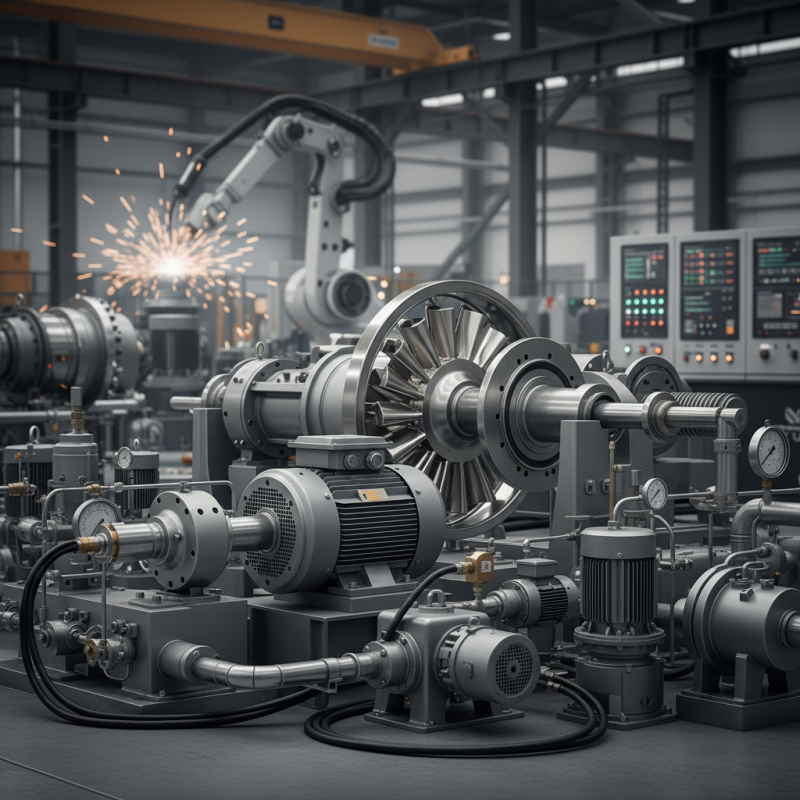
Definition and Classification of Rotating Machines
Rotating machines are critical in various industries. They include motors, generators, and turbines. The classification of these machines typically arises from their design and application. Basic categories comprise AC (Alternating Current) and DC (Direct Current) machines. AC machines dominate the market, accounting for about 70% of all rotating equipment used today. This is primarily due to their efficiency and reliability in industrial applications.
Rotating machines are further segmented based on their function. For instance, an electric motor converts electrical energy into mechanical energy. Conversely, a generator does the opposite, transforming mechanical energy into electricity. Turbines convert kinetic energy from fluids into rotational energy. The versatility of these machines leads to various uses across sectors such as manufacturing and energy.
There are limitations to consider. Maintenance requirements can be demanding. Wear and tear can significantly affect performance. A report by the International Energy Agency (IEA) indicated that nearly 30% of energy consumption in industries is attributed to electric motors. Hence, optimizing these machines is essential. Regular checks and updated technologies can mitigate downtimes and inefficiencies. Balancing performance and maintenance is key to improving overall productivity in operations.
Rotating Machines Classification
Fundamental Principles of Operation in Rotating Machines
Rotating machines are essential in various industries, converting energy to perform mechanical work. Their operation is based on fundamental principles of electromagnetism and mechanics. A key principle is the interaction between magnetic fields and electric current. This interaction creates rotational motion, crucial for generators and motors. According to the International Electrotechnical Commission, over 70% of electrical energy produced is converted by rotating machines.
Efficiency remains a major concern. Not all energy input is converted into useful work. Some energy is lost as heat. Reports by the Electric Power Research Institute show that efficiency can drop to 90% in aging machines. This loss impacts performance and lifespan. Regular maintenance is essential to improve efficiency and detect potential issues.
The design of rotating machines is intricate. Factors like rotor size, material, and winding configuration impact performance. Inadequate design can lead to vibrations and noise. For example, imbalances can cause excessive wear. A report from the Institute of Electrical and Electronics Engineers highlights that 25% of downtime in industrial settings results from rotating machine failures. Thus, continuous improvement in design and operation is necessary to enhance reliability.
Key Components and Their Functions in Rotating Machines
Rotating machines are crucial in various industries. They convert mechanical energy into electrical energy or vice versa. Key components make these machines efficient and functional. One essential part is the rotor. It spins, generating electromagnetic fields. This action produces electricity in generators. In motors, it interacts with magnetic fields, causing movement.
Another vital component is the stator. The stator remains stationary and provides the necessary magnetic field. Its design influences efficiency and performance. Research shows that machines with optimized stators operate at 90% efficiency. This number highlights the importance of precise engineering.
Bearings also play a critical role. They reduce friction between moving parts. According to recent studies, improper bearing lubrication can lead to a 30% drop in machine efficiency. Moreover, frequent maintenance is needed to prevent breakdowns. Ignoring regular checks can lead to costly repairs. Each component must work in harmony, yet, issues like wear and tear often arise. Balancing performance and durability remains a challenge.
Applications of Rotating Machines Across Various Industries
Rotating machines play a vital role in various industries. They are essential for generating power, moving products, and automating processes. In manufacturing, for instance, electric motors drive conveyor belts. These machines improve efficiency and reduce manual labor. However, their implementation can sometimes lead to unexpected issues.
In the energy sector, turbines are used in power plants. They convert thermal energy into mechanical energy. This process is crucial for electricity generation. Yet, maintenance can be challenging. If turbines are not regularly inspected, they can fail. This can disrupt production and lead to significant downtime.
The transportation industry also relies on rotating machines. Engines in vehicles convert fuel into motion. This technology has evolved, but it still faces limitations. Noise and emissions remain concerns. Finding solutions requires ongoing innovation and investment. Additionally, as industries embrace automation, the dependence on rotating machines will only grow.
Performance Metrics and Efficiency Considerations in Rotating Machinery
Rotating machinery plays a crucial role in various industries. Understanding its performance metrics is essential for efficiency. One key metric is the efficiency ratio. Reports indicate that well-maintained machines can achieve efficiencies up to 95%. However, efficiency can drop significantly due to factors like wear, misalignment, or improper loading.
Another important metric is mean time between failures (MTBF). Industry studies suggest that the MTBF for rotating equipment typically ranges from 2,000 to 25,000 hours. Yet, this number can vary widely based on maintenance practices. Regular monitoring and predictive maintenance can enhance performance.
Vibration analysis is a critical tool for assessing machinery health. Professionals recommend monitoring vibration levels to prevent catastrophic failures. For example, excessive vibration can indicate imbalances or bearing issues. Identifying these problems early can save costs and improve uptime. But, relying solely on vibration data can be misleading without proper context.