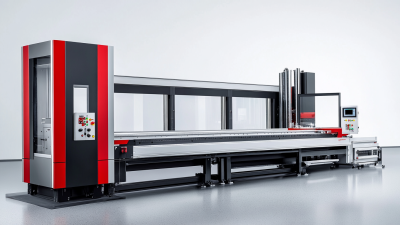
How to Choose Window Manufacturing Equipment?
Choosing Window Manufacturing Equipment is a practical decision that affects quality, output, labor, and long-term profitability. A bright showroom cannot reveal every weakness. The real test begins when aluminum profiles, PVC frames, glass units, and hardware enter daily production.
Joseph M. Juran, a respected manufacturing-quality authority, said, “Quality does not happen by accident. It has to be planned.” His principle applies directly to window production. Buyers should examine cutting accuracy, welding consistency, CNC capability, glass handling, cleaning access, and operator safety. Check the machine’s tolerance records, not only its advertised speed. A fast saw that creates uneven corners can increase waste and rework. That defeats the original investment.
Experience also matters. Ask suppliers for demonstrations using your actual profile sizes and production drawings. Watch how quickly operators change tools. Notice the noise, dust control, guarding, software interface, and maintenance points. Small details become expensive after thousands of cycles. Energy consumption deserves attention, too. A lower purchase price may hide higher operating costs.
The “best” system is rarely the most automated one. It is the system that matches your product mix, factory space, workforce, and growth plan. Some manufacturers overbuy capacity. Others choose equipment that becomes restrictive within two years. Both decisions deserve reflection. Request references from comparable factories, verify service response times, and review spare-parts availability before signing. Reliable Window Manufacturing Equipment should deliver repeatable results, measurable efficiency, and support when production becomes difficult. It should also leave room for honest improvement. No machine solves a poorly planned process.
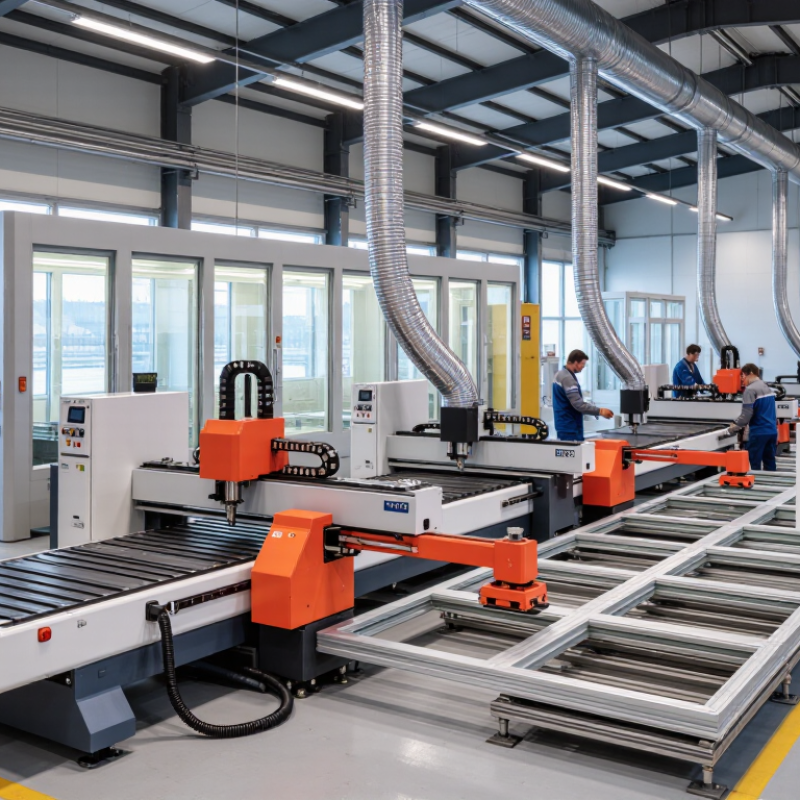
Define the Required Window Types, Materials, and Production Capacity
How to Choose Window Manufacturing Equipment?
Define the Required Window Types, Materials, and Production Capacity
Equipment selection should begin with the window, not the machine catalog. List every planned profile, glazing method, frame material, and hardware option. PVC windows need precise cutting, welding, and corner cleaning. Aluminum systems require accurate sawing, routing, and crimping. Wood and composite frames may demand different machining and surface-treatment controls. The U.S. Department of Energy reports that windows can cause 25–30% of residential heating and cooling energy use. Therefore, glass handling, sealing, and inspection equipment deserve serious attention. A minor sealing defect can become a visible customer complaint.
Capacity must reflect real orders, not an impressive brochure number. Suppose annual demand reaches 24,000 units. With 250 working days and two shifts, production needs 48 units per shift daily, or six units hourly during an eight-hour shift. Add time for changeovers, maintenance, rework, and material movement. A safer target may be seven units per hour. It is only an estimate. Actual downtime may challenge it. The International Energy Agency’s 2023 Global Status Report states that buildings consume about 30% of global energy and produce roughly 26% of energy-related emissions. This strengthens the case for testing thermal performance and airtightness during production. Request sample runs using your actual profiles and glass. Measure cycle time, scrap, operator movements, and quality consistency. The fastest line is not always the most productive one.
Evaluate Essential Equipment Functions and Manufacturing Specifications
How to Choose Window Manufacturing Equipment?
Evaluate Essential Equipment Functions and Manufacturing Specifications
Choosing window manufacturing equipment starts with production needs, not appearance. Define the window profiles, materials, sizes, and daily output before comparing machines. A reliable cutting unit should maintain precise angles and stable dimensions across repeated cycles. Welding or joining equipment must control temperature, pressure, and cooling time accurately. Small deviations can create visible frame gaps.
Review the specifications carefully. Check cutting tolerance, spindle speed, motor power, table length, and compatible profile dimensions. Also examine automation levels, changeover time, dust control, and emergency stopping functions. Equipment should support your actual workflow, not an impressive specification sheet. Measure twice. A machine that runs quickly but creates frequent adjustments may reduce profit and increase material waste.
Tips: Request sample production before purchasing. Test a complete window, including cutting, joining, drilling, and hardware fitting. Observe the finished corners under strong light. Ask whether operators can access settings safely and understand maintenance procedures. Noise matters. Keep records of trial results, defect rates, cycle times, and energy use.
Experienced manufacturers also evaluate service access and spare-part availability. A durable machine still needs cleaning, calibration, and inspection. Confirm the manufacturer provides clear manuals, training, and measurable performance data. I would not rely on speed alone; I once underestimated setup time, and the faster machine performed poorly during frequent profile changes. Leave room for review. Your production plan may change, so flexible equipment can be more valuable than maximum capacity.
How to Choose Window Manufacturing Equipment?
Evaluate Essential Equipment Functions and Manufacturing Specifications
This chart shows representative cycle-time benchmarks for common PVC and aluminum window manufacturing operations in a mid-volume production line. Actual results vary with window size, profile design, material, batch size, operator involvement, and automation level. When evaluating equipment, compare cycle time together with cutting accuracy, positioning repeatability, processing capacity, safety functions, changeover time, and maintenance accessibility.
Compare Automation Levels, Throughput, Precision, and Flexibility
How to Choose Window Manufacturing Equipment?
Choosing window manufacturing equipment begins with production reality, not impressive specifications. Automation should match order volume, labor skills, and product variety. A fully automated line can reduce handling errors and stabilize output. Yet it may struggle with frequent custom orders and small batches. Semi-automatic equipment often gives operators better control during unusual jobs.
Throughput must be measured in completed windows per hour, not advertised cycle time. Ask suppliers to demonstrate your actual profiles, hardware, and dimensions. Record loading time, tool changes, maintenance stops, and rejected units. A machine rated for 120 frames hourly may produce far less during mixed production. That gap matters.
Precision protects both appearance and performance. Check cutting tolerances, welding alignment, corner strength, and glazing consistency. Small deviations can create visible gaps or difficult installation. Request inspection reports and repeatability tests. Flexibility is equally important. Equipment should handle different profile depths, sash sizes, and hardware positions without lengthy reprogramming. Quick changeover saves more than speed when orders vary daily. I once underestimated setup time; the line looked fast but lost hours between batches. That mistake changed how I compare machines. Use sample production trials, operator feedback, and maintenance records before deciding. A complicated system may deliver excellent precision, but only when trained staff can manage it reliably.
Assess Installation, Maintenance, Safety, and Operator Requirements
Choosing window manufacturing equipment requires more than comparing cutting speed or output. Assess how the machine will be installed, serviced, and operated each day. Confirm floor loading, electrical capacity, compressed-air quality, ventilation, and access for forklifts. A narrow service gap may look efficient, but it can make maintenance unsafe.
Maintenance planning should include lubrication points, spare-part availability, diagnostic access, and documented shutdown procedures. The U.S. Bureau of Labor Statistics reported 3.3 recordable injury cases per 100 full-time manufacturing workers in 2023. This figure supports a practical question: can technicians inspect the machine without reaching across moving components? OSHA’s enforcement data also continues to identify machine guarding as a frequent citation area. Guards, interlocks, emergency stops, and lockout points must be visible and testable.
Operator requirements are easy to underestimate. Review loading height, control-panel reach, noise, heat, dust, and repetitive hand movements. The equipment should support clear training, not depend on one highly experienced employee. Provide task-specific instructions and verify competency after installation. A good supplier should explain setup time, maintenance intervals, fault recovery, and expected training hours. ISO 12100 risk-assessment principles can guide this review, but paperwork alone cannot reveal every problem. Test the machine with real profiles, gloves, tools, and production speeds. No checklist is perfect. A poorly placed sensor may still be missed. Reassess after the first month, when operators have discovered the machine’s less obvious weaknesses.
Calculate Total Costs, Supplier Support, and Long-Term Value
How to Choose Window Manufacturing Equipment?
Calculate Total Costs, Supplier Support, and Long-Term Value
The purchase price is only the visible part of a window machine’s cost. Calculate tooling, installation, operator training, energy use, maintenance, software, scrap, and financing. A machine costing $180,000 may require another $35,000 before producing its first saleable frame. Include floor preparation and electrical upgrades. These costs are often overlooked.
Production data should guide the decision. Track cycle time, changeover minutes, reject rates, and monthly output from similar projects. The U.S. Department of Energy reports that windows can influence roughly 25% to 30% of residential heating and cooling energy use. That makes accurate cutting, sealing, and quality inspection commercially important. McKinsey research indicates predictive maintenance can reduce machine downtime by 30% to 50%. The figure is useful, but not guaranteed.
Ask suppliers for service response times, spare-parts availability, remote diagnostics, and technician coverage. Request written training plans. A supplier’s support promise should survive a busy Monday morning. Long-term value depends on uptime, repeatable quality, and upgrade options. Compare five-year cost per finished window, not the first invoice. I have seen spreadsheets ignore operator turnover and rejected profiles. That was a costly assumption. Leave room for imperfect forecasts, then test the equipment with your own materials, glass sizes, and production speeds.