
How to Choose the Best Catering Trolley from China?

Choosing the best Catering Trolley from China requires more than comparing photographs and factory prices. It involves understanding construction, insulation, mobility, hygiene, and long-term service. A trolley may look impressive online yet perform poorly in a busy hotel corridor. Careful evaluation matters.

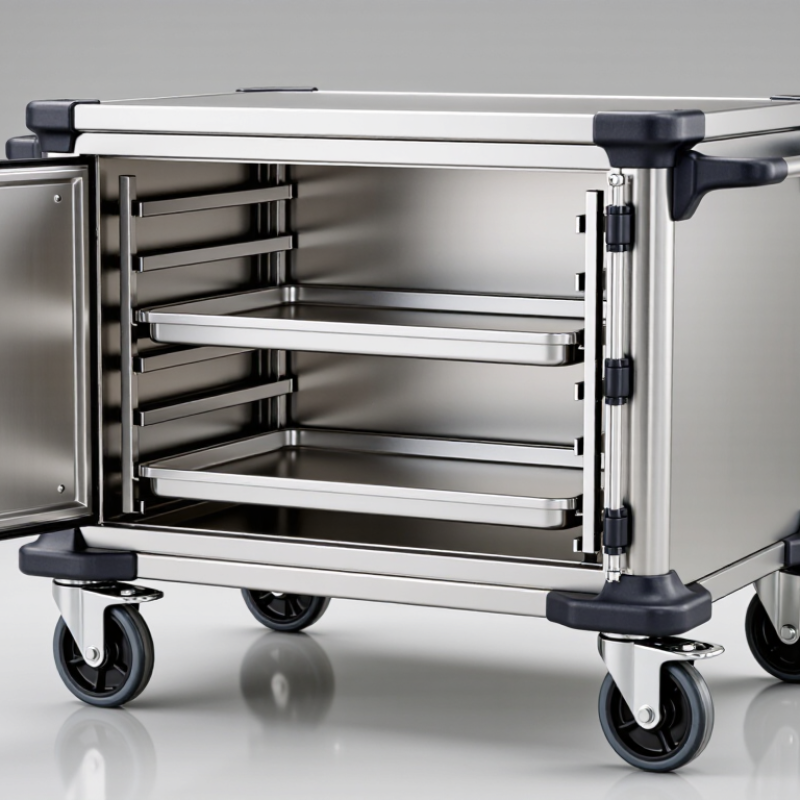
Experienced buyers usually begin with the intended environment. Will the trolley serve aircraft meals, hospital trays, banquet dishes, or room service? Each application demands different dimensions, temperatures, wheel systems, and loading capacity. Stainless steel bodies are common because they resist corrosion and simplify cleaning. However, material grade, weld quality, door seals, and corner protection should be verified through samples or detailed technical documents.

Ask the manufacturer for product drawings, test reports, factory photographs, and references from comparable customers. A reliable supplier should explain insulation performance, caster durability, spare-parts availability, and maintenance procedures clearly. Request a sample when practical. Small details matter. Check whether the doors close evenly, whether the brakes hold on a slope, and whether trays slide smoothly without rattling.

Certifications can support trust, but they should not replace independent judgment. Confirm what each certificate covers and whether it matches your destination market. Pricing also deserves careful analysis. A cheaper Catering Trolley may involve thinner panels, weaker hardware, or limited after-sales support. That difference may become expensive after months of daily use.

No selection process is perfect. Specifications can be misunderstood, and factory promises may sound stronger than actual performance. Build a written checklist, confirm every critical point, and keep communication documented. With practical testing and professional supplier assessment, buyers can reduce risk and choose equipment that remains dependable in demanding service conditions.
How to Choose the Best Catering Trolley from China?

Define Your Catering Trolley’s Purpose and Operating Environment

Choosing a catering trolley from China starts with its purpose, not its appearance. Define the exact service task before comparing materials or finishes. A breakfast trolley may carry plates, beverages, and insulated containers. A banquet trolley may require heavier shelves and stronger brakes. Delivery work needs smooth movement over longer distances. Keep it practical.

Measure the operating environment carefully. Record doorway widths, elevator sizes, corridor turns, and storage space. Check the floor surface, too. Ceramic tiles, carpet, ramps, and outdoor paving affect wheel performance. Larger casters may help on uneven floors, but they can reduce turning ease in narrow spaces. Test the trolley while fully loaded. An empty trolley can feel misleadingly stable.

Temperature, moisture, cleaning routines, and staff habits also shape the specification. A humid kitchen may need corrosion-resistant surfaces and sealed components. Frequent sanitation requires accessible corners and durable joints. Ask the Chinese supplier for load ratings, wheel details, material information, and dimensional drawings. Request evidence from practical testing, not only polished photographs. Do not guess. One common mistake is choosing a beautiful trolley that blocks an elevator or exceeds the safe working load. That mistake is easy to prevent, although real workplaces often reveal unexpected limits. Review the design with the people who will push, clean, and store it every day.

Compare Trolley Types, Sizes, Materials, and Storage Features

Choosing the best catering trolley from China starts with the service environment. A heated trolley suits banquet kitchens and buffet lines. A beverage trolley needs smooth movement and spill-resistant shelves. For hotel corridors, choose a compact service trolley with quiet casters. I once selected a model by appearance alone, and its turning radius caused daily problems.

Measure doorways, elevators, storage rooms, and serving distances before requesting quotations. A two-tier trolley saves space but may limit large trays. A three-tier design offers better separation for plates, drinks, and utensils. Check the working height carefully. Staff should not bend repeatedly during busy service.

Material affects hygiene, weight, and long-term maintenance. Stainless steel is practical for humid kitchens and frequent cleaning. Aluminum is lighter, but it may show dents more easily. Plastic shelves reduce noise, although poor-quality surfaces can stain or crack. Ask for material grades, load ratings, weld details, and caster specifications. Photographs are useful, but sample inspection is more reliable. Request a real load test with weighted trays.

Storage features deserve equal attention. Look for removable shelves, foldable frames, locking wheels, and vertical parking options. Some trolleys include enclosed cabinets for linens or service tools. Measure the folded size, not only the operating size. This detail is easy to miss. Before purchasing from China, confirm drawings, packaging protection, replacement parts, and inspection standards in writing. A lower price may hide weak wheels, difficult assembly, or limited after-sales support.

How to Choose the Best Catering Trolley from China? - Compare Trolley Types, Sizes, Materials, and Storage Features

Trolley Type Typical Size (L × W × H) Approx. Capacity Main Materials Shelf or Tray Configuration Storage Features Mobility and Safety Best For Estimated Weight Selection Rating
Service and Utility Trolley 850–1,050 × 450–600 × 900–1,000 mm 60–120 kg distributed load Stainless steel frame and shelves; optional plastic or wood-effect panels 2–3 open shelves with raised edges Open storage for plates, cookware, beverages, and cleaning supplies Four swivel casters; two or four locking brakes; push handle Restaurants, hotels, buffets, and general food-service transport 12–25 kg ★★★★★
Room-Service Trolley 900–1,200 × 550–700 × 750–1,000 mm 80–150 kg distributed load Powder-coated steel or stainless steel with laminate or solid-surface top Removable or folding top; 1–2 lower shelves Foldable side leaves, cutlery drawer, lower storage shelf, and optional waste compartment Heavy-duty casters, wheel bumpers, parking brakes, and rounded corners Hotel room service, banquet delivery, and catered events 25–45 kg ★★★★★
Tray Collection Trolley 900–1,250 × 500–700 × 950–1,300 mm 18–36 standard meal trays Stainless steel or coated steel; ABS or polypropylene tray guides Fixed tray rails with approximately 100–125 mm vertical spacing Dedicated tray slots; enclosed or open lower section for dishes and waste bins Four casters, corner bumpers, ergonomic handle, and optional brake system Hospitals, cafeterias, schools, airlines, and institutional dining 30–55 kg ★★★★☆
Heated Food Holding Trolley 700–1,000 × 700–900 × 1,000–1,600 mm 10–24 meal trays or food pans Double-wall stainless steel with insulated interior Adjustable tray rails; GN pan-compatible models available Insulated cabinet, digital temperature display, removable water pan, and door gasket Lockable casters, thermal insulation, door latch, and over-temperature protection Banquets, healthcare catering, central kitchens, and hot meal delivery 55–110 kg ★★★★★
Beverage and Bar Trolley 700–950 × 400–550 × 850–1,100 mm 40–80 kg distributed load Stainless steel, aluminum, or steel frame with moisture-resistant shelves 2–3 shelves with bottle-retaining rails Glass rack, bottle holders, ice container space, drawer, and optional waste bin Small swivel casters, two locking wheels, stable base, and raised shelf lips Bars, lounges, conference service, weddings, and mobile beverage stations 10–22 kg ★★★★☆
Dishwasher or Plate Rack Trolley 600–900 × 500–700 × 800–1,100 mm 80–200 plates, depending on rack design 304-grade stainless steel or corrosion-resistant coated steel Vertical dividers, plate pegs, or removable dish racks Compact vertical storage; open drying area; optional removable rack modules Water-resistant casters, drain-friendly shelves, protective bumpers, and brakes Commercial kitchens, dishwashing areas, buffets, and banquet operations 18–40 kg ★★★★☆
Folding Catering Trolley 700–1,000 × 450–650 × 850–1,050 mm 50–100 kg distributed load Aluminum or powder-coated steel frame with polypropylene shelves 2–3 folding shelves; compact folded profile Folds to approximately 150–300 mm thick for transport and off-season storage Lightweight casters, locking mechanism, handle, and shelf retaining edges Outdoor catering, event contractors, temporary kitchens, and small venues 8–18 kg ★★★★☆

Note: Dimensions, load ratings, tray spacing, and weights are typical industry ranges. Actual specifications may vary according to trolley construction, caster size, insulation, electrical components, and customization requirements.

Evaluate Chinese Suppliers, Manufacturing Quality, and Customization Options

How to Choose the Best Catering Trolley from China?

When choosing a catering trolley from China, inspect the supplier before comparing quotations. Request business registration, factory photographs, production records, and recent third-party audit reports. Do not rely on polished showroom images. China’s National Bureau of Statistics reported catering revenue above 5 trillion yuan in 2023, signaling strong domestic demand. However, demand does not prove export-grade consistency. Ask for samples from the same production line and compare welds, castors, doors, and insulation. Record every defect, even minor scratches.

Manufacturing quality should be measured, not assumed. Check stainless-steel grade, sheet thickness, load capacity, braking performance, and temperature retention. Ask how measurements are calibrated and how rejected parts are controlled. The ISO Survey of Management System Standard Certifications 2022 recorded more than 600,000 ISO 9001 certificates in China. Yet certification alone cannot prove every trolley is reliable. Request inspection plans, material certificates, test results, and batch traceability. Photograph the trolley before shipment. For food-contact surfaces, request documentation matching the destination market’s hygiene requirements.

Customization can improve service, but it can also hide weak engineering. Define dimensions, tray spacing, handle height, wheel type, insulation, locks, and electrical specifications in one approved drawing. Confirm whether changes require new tooling or affect minimum order quantities. Use a paid prototype before mass production. That step feels slow. It often prevents expensive surprises. China’s 2023 industrial statistics show manufacturing remains a major production base, yet supplier capability varies sharply by factory. Leave room for revision; my own first specification was too vague. A signed drawing and sample report should travel with every purchase order.

Check Food Safety Standards, Product Testing, and Supplier Certifications

How to Choose the Best Catering Trolley from China?

A catering trolley should protect food, staff, and guests during every delivery. Start by checking the supplier’s food safety standards and material declarations. Food-contact surfaces should resist corrosion, odors, and repeated cleaning. Ask whether the stainless steel grade is documented, not merely described as “premium.” Small details matter. Look for smooth welds, sealed corners, and removable trays without sharp edges.

Request recent product testing reports from an independent laboratory. These reports should match the exact trolley model, not a similar sample. Check tests for temperature retention, load capacity, caster durability, electrical safety, and cleaning resistance. For heated models, ask about temperature accuracy under a full load. A display showing 70°C means little if food drops below that level during service. Testing conditions can also be too ideal. Ask practical questions about uneven floors, long shifts, and frequent door opening.

Supplier certifications can support trust, but certificates need verification. Check the certificate number, issuing body, scope, and expiry date. Confirm that the factory address matches the production site. Request batch records, inspection checklists, and corrective-action reports. A supplier willing to share weaknesses may be more reliable than one offering perfect claims. I would also order a sample before placing a large order. During inspection, I would measure internal temperature, test wheel movement, and examine seams after cleaning. One missed detail can become an expensive service problem.

How to Choose the Best Catering Trolley from China?

Food-safety temperature benchmarks for product testing and supplier verification

How to use this chart: Ask the supplier to provide test evidence showing that the trolley can support the required holding and reheating conditions without excessive temperature loss. Confirm that food-contact surfaces comply with the regulations required in your destination market, and request material declarations, migration-test reports, and documented quality inspections.

Reference benchmarks: The U.S. FDA Food Code 2022 specifies cold holding at 5°C (41°F) or below, hot holding at 57°C (135°F) or above, and reheating for hot holding at 74°C (165°F) for 15 seconds. Local regulations may differ.

Sources: U.S. FDA Food Code 2022; Regulation (EC) No. 1935/2004 on materials intended to contact food; Commission Regulation (EC) No. 2023/2006 on good manufacturing practice.

Review Pricing, Shipping Terms, Warranty Coverage, and After-Sales Support

How to Choose the Best Catering Trolley from China?

Price should be judged as landed cost, not factory price. Request three written quotations with identical specifications, packaging, quantities, and delivery terms. Compare unit price, inspection fees, insurance, import duties, inland delivery, and spare parts. Ask whether the quotation uses EXW, FOB, CIF, or DAP terms. These choices can shift responsibility and cash flow considerably. I would question my own assumptions here. The cheapest offer may only hide missing costs.

Shipping deserves careful review. UNCTAD’s Review of Maritime Transport 2024 states that over 80% of global merchandise trade by volume moves by sea. Sea freight may reduce cost, but port congestion and seasonal delays still affect delivery schedules. Confirm production time, port of loading, carton dimensions, container loading plans, and tracking procedures. Require written rules for damaged goods. A small photo report before shipment can prevent a large argument later.

Warranty language must be specific. Check coverage length, electrical parts, casters, insulation, welds, and surface finishes. Ask who pays return freight and how quickly replacement parts ship. ISO 9001 certification can indicate controlled processes, but it is not a product warranty. After-sales support should include technical drawings, operating instructions, video assistance, and a named contact. The World Bank’s Logistics Performance Index 2023 highlights the importance of reliable logistics services and shipment timeliness. Support can fail quietly. Test response quality before ordering, using practical questions about cleaning, maintenance, and spare-part availability.

Optimized by Optimole