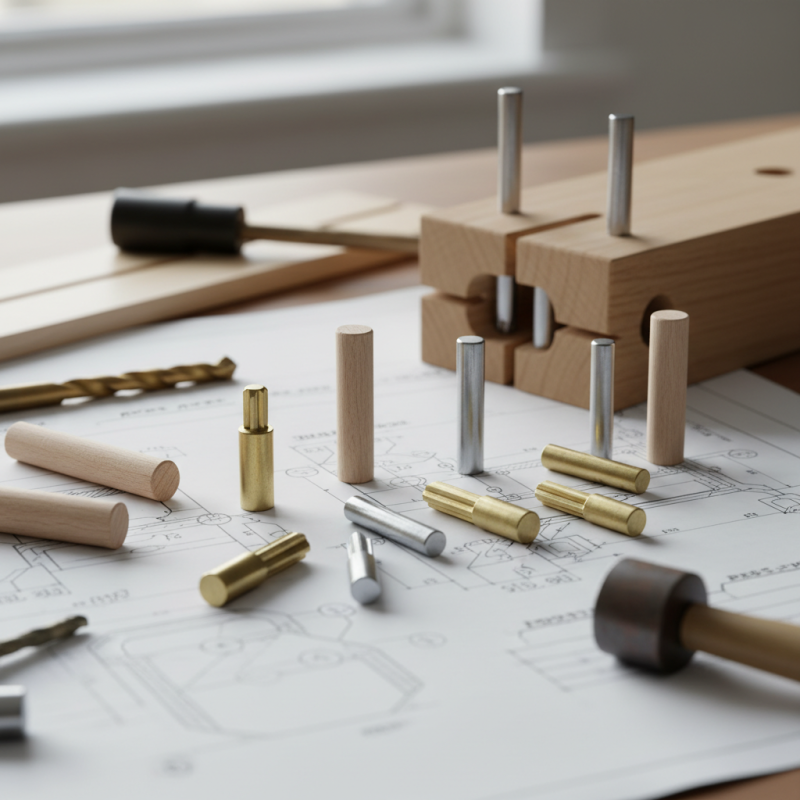
How to Choose the Right Double-Ended Dowel Pin for Your Project?
Choosing the right Double-Ended Dowel Pin for your project can seem daunting. With various sizes and materials, it's essential to understand what you need. Each project may demand different specifications.
Double-Ended Dowel Pins offer a unique solution for aligning and securing components. Their versatility makes them popular in woodworking and furniture assembly. However, not all dowel pins are created equal.
When selecting a Double-Ended Dowel Pin, consider the material, length, and diameter. The right choice can enhance stability. A mismatched pin could lead to structural issues. Thus, careful evaluation of your project's requirements is crucial. Balancing functionality with aesthetic appeal will help you achieve the best outcome.
Understanding the Functionality of Double-Ended Dowel Pins
Double-ended dowel pins are essential tools in woodworking and construction projects. They facilitate alignment and strength in various builds. Made with precision, these pins feature a cylindrical shape with a pointed end on both sides. This design allows for easy insertion into pre-drilled holes. When used correctly, they enhance the stability of joints and assemblies.
Understanding the functionality of double-ended dowel pins requires a close look at their applications. They work effectively in furniture assembly, cabinetry, and even in building frames. Proper spacing and alignment are crucial for achieving optimal strength. A common mistake is using an incorrect size or length, resulting in loose joints. Always measure accurately before selecting a pin for your project.
Some may overlook the importance of material choice. Different materials can influence the durability of the dowel pin. For instance, metal pins may offer more strength but can lead to splitting in softer woods. It's essential to weigh the pros and cons of each option. Evaluate your specific needs and the characteristics of your project before making a decision. Through reflection and careful consideration, you can choose the right dowel pin that serves your needs.
How to Choose the Right Double-Ended Dowel Pin for Your Project?
This chart illustrates the importance of various criteria when selecting a double-ended dowel pin for different projects. The data reflects the average priority assigned by users to each criterion.
Materials Used in Double-Ended Dowel Pins: A Comprehensive Overview
When selecting double-ended dowel pins, the material is crucial for the project’s success. Common materials include steel, stainless steel, brass, and plastic. Steel offers durability and strength. It is ideal for heavy-duty applications. Stainless steel, while more resistant to corrosion, can be more expensive. It suits projects exposed to moisture.
Brass dowel pins provide elegance and good wear resistance. They are often chosen for decorative pieces. Plastic options are lightweight and resistant to chemicals. However, they may not withstand heavy loads. Each material has its strengths and weaknesses. Understanding these can lead to better choices.
Consider how the pins will be used. Will they be under pressure or in humid environments? Will aesthetics play a role? Some materials may not meet these demands. Evaluate the specifics of your project. This assessment can save time and reduce mistakes. Consult with experts when in doubt. Their experience can help navigate complex choices.
Key Dimensions and Sizes to Consider for Your Project
When selecting a double-ended dowel pin for your project, pay close attention to key dimensions. The pin diameter is crucial. Industry standards indicate that the most common diameters range from 6 mm to 12 mm. However, for specific applications, smaller or larger sizes may be necessary. Consider the weight and load the pin will support. Larger diameters offer greater strength but may not fit into tighter spaces.
Length is another essential aspect. Standard lengths typically range from 20 mm to 150 mm. For custom projects, precise lengths may be required. Accurate measurement ensures a snug fit, which enhances structural integrity. Miscalculating length can lead to assembly failure in critical applications.
Material choice impacts the pin's performance and durability. Steel pins are highly durable, suitable for heavy-duty applications. Conversely, brass pins are more suited for lighter loads. A study by the American Institute of Manufacturing suggests that material failures occur in up to 15% of dowel pin applications due to improper selection. Therefore, understanding the specific needs of your project is vital.
Choosing the Right Finish for Enhanced Performance and Aesthetics
When selecting a double-ended dowel pin, the finish is vital for both performance and appearance. A smooth, polished surface can enhance the ease of insertion and removal. It also minimizes friction when aligning components. Conversely, a textured finish may offer better grip in specific applications. This choice impacts both function and aesthetic appeal.
Consider how finishes can affect durability as well. Anti-corrosive coatings can prolong the life of your dowel pins, especially in challenging environments. Yet, these coatings can sometimes alter dimensions slightly. Be mindful of this, as even a minor change can lead to misalignment. A detailed inspection may be necessary.
Ultimately, the right finish depends on your project's demands. A well-chosen finish will not only complement the design but also improve the overall functionality. Reflect on the project's needs and how each finish serves those requirements. Look closely and make thoughtful decisions.
Common Applications and Usage Tips for Double-Ended Dowel Pins
Double-ended dowel pins are versatile fasteners widely used in woodworking and metalworking projects. They play a crucial role in aligning and joining two components together. Their applications range from furniture assembly to machinery alignment. Understanding when and how to use them can enhance the durability and accuracy of your builds.
When selecting dowel pins, consider the material of your project. Wooden dowel pins are popular for furniture, while metal options work well for machines. Ensure the diameter of the pin matches the holes in your workpieces. Precision is essential; any gap can lead to misalignment.
Tips: Measure twice before drilling to avoid errors. A small mistake can result in a loose joint. Additionally, consider the length of the pin. Longer pins provide better support, but they can also complicate assembly. Lastly, always test fit your pins in scrap material first. This prevents wasting time and materials on misaligned joins.