How to Choose the Best Pouch Packing Line for Your Business?
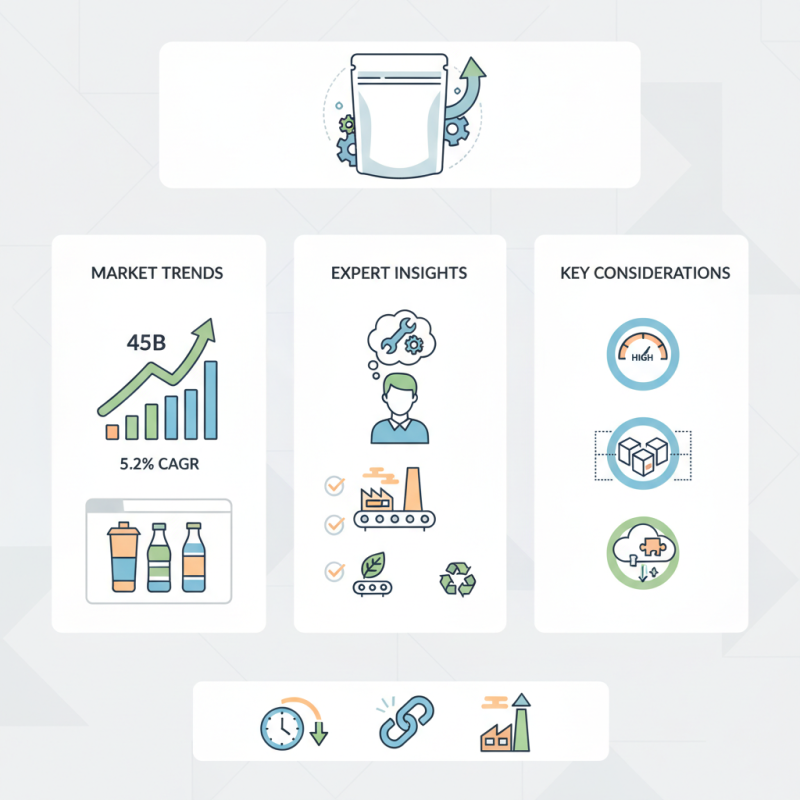
In the competitive landscape of packaging, choosing the right Pouch Packing Line is vital for success. Recent reports indicate that the global pouch packaging market is projected to reach $45 billion by 2027, growing at a CAGR of 5.2%. Such statistics reflect the increasing demand for efficient and versatile packing solutions, particularly in the food and beverage sectors.
Expert James Anderson, a prominent figure in the packaging industry, emphasizes, "Selecting the ideal Pouch Packing Line is a critical step for businesses aiming to enhance operational efficiency." His insights highlight the need for tailored solutions that address specific production requirements. Selecting the correct machinery can significantly impact the overall performance and sustainability of operations.
However, businesses often struggle with the myriad of options available. Many firms overlook essential factors like speed, scalability, and integration capabilities. Real-world scenarios show that a poorly chosen Pouch Packing Line can lead to costly downtimes and reduced productivity. Reflecting on past experiences can serve as a guide in making informed decisions for future investments.
Understanding Your Packaging Needs for Pouch Packing Lines
When selecting a pouch packing line, understanding your packaging needs is crucial. The right line must accommodate your product type, size, and desired shelf life. Recent industry reports indicate that flexible packaging is projected to reach $300 billion by 2027, highlighting a growing trend in pouch use. This shift signifies businesses must adapt to consumer preferences for convenience and sustainability.
Consider your production capacity. High-speed pouch lines can process up to 600 pouches per minute. For businesses with lower volume needs, slower lines may suffice. Effective analysis of production goals will ensure you choose the most suitable machinery. Additionally, pay attention to compatibility with various materials. Many pouches require specific sealing techniques, impacting durability and freshness.
Moreover, reflect on costs versus benefits. While an advanced pouch packing line may seem daunting financially, it can substantially enhance efficiency and reduce labor costs. Understanding the fine balance between investment and return is crucial. Always assess real-world performance. Look for case studies detailing successes and challenges faced by similar businesses. Such insights provide valuable lessons, ensuring you make an informed decision.
Evaluating Different Types of Pouch Packing Machines
When evaluating different types of pouch packing machines, it’s essential to consider their design and efficiency. Various machines exist for diverse packaging needs. Some are suited for liquids, while others handle powders or granules. Assessing the specific needs of your products is crucial. This ensures the machine you choose can adequately protect and preserve your items.
The speed of operation is another critical factor. Some machines can produce hundreds of pouches per minute. However, higher speeds may require more maintenance. Reliability should not be compromised for speed alone. Keep in mind that the best machine is one that balances both speed and consistency. Obsolete models may lead to frequent breakdowns, so staying updated is important.
Sustainability is gaining attention in the packaging industry. Some machines are designed for eco-friendly materials, which can appeal to environmentally conscious consumers. However, implementing such solutions may require initial investment and training. Always consider if your team is ready for this shift. Understanding the pros and cons of each machine will lead to a more suitable choice for your business.
Key Features to Consider in a Pouch Packing Line
Choosing the right pouch packing line can significantly impact your business's efficiency and product quality. When evaluating options, consider the machine's speed. A faster machine can boost productivity, but ensure it meets your output requirements without sacrificing quality. Assess whether the speed aligns with your volume and demand.
Another vital feature is flexibility. The best pouch packing lines can handle various pouch sizes and materials. This adaptability allows you to innovate and adjust your product offerings. Also, look for user-friendly controls. Intuitive interfaces streamline operation and reduce training time.
Consider maintenance aspects as well. Machines that require frequent repairs can disrupt your workflow. Reliable equipment often has readily available parts, ensuring minimal downtime. Reflecting on these considerations can help you make informed choices. Balancing speed, flexibility, and maintenance can lead to greater efficiency in your packaging line.
Assessing Production Capacity and Efficiency Requirements
When selecting a pouch packing line, assessing production capacity and efficiency is crucial. A recent report indicates that businesses can increase productivity by up to 30% with the right equipment. Understanding your current and future production needs is essential. For instance, if your output is 1,000 units per day, but you anticipate growth, a line that accommodates up to 2,500 units is advisable.
Efficiency is not solely about speed. It's also about minimizing downtime. Studies show that manufacturers lose 20% of their productivity due to machine malfunctions and slow changeovers. Investing in a system that offers quick changeover times could help mitigate this loss. Look for lines that include automation features, as these can reduce labor costs and improve consistency in production.
Consider the size and layout of your facility, too. Many businesses overlook how space constraints can impact the efficiency of their operations. Ideally, your pouch packing line should fit seamlessly into your existing workspace without causing bottlenecks. Conducting a thorough assessment can unveil potential issues. You might find that some equipment doesn't integrate well with your current processes, leading to inefficiencies down the line.
How to Choose the Best Pouch Packing Line for Your Business? - Assessing Production Capacity and Efficiency Requirements
| Packing Line Type | Max Speed (Pouches/min) | Production Capacity (Units/day) | Efficiency Rate (%) | Ideal Product Type |
| Vertical Pouch Filling | 30 | 15,000 | 85 | Granular products |
| Horizontal Pouch Filling | 40 | 20,000 | 90 | Liquid products |
| Rotary Pouch Filling | 50 | 25,000 | 95 | Powder products |
| Multi-Head Weigher Pouch | 35 | 18,000 | 88 | Mixed products |
Budgeting and Cost Considerations for Pouch Packing Solutions
When selecting a pouch packing line, budgeting and cost considerations are critical. The initial investment in equipment can vary widely. Reports indicate that automatic pouch packing machines can range from $30,000 to over $150,000. It’s essential to assess your production needs against these costs. While higher-priced models may offer advanced features, they might not be necessary for smaller operations. Always analyze your specific requirements first.
Operational costs also play a significant role in overall budgeting. The average energy consumption for a pouch packing machine can be high, leading to operational expenses that reach thousands annually. A report indicates that efficient machines can reduce energy usage by 20-40%. Additionally, maintenance costs need to be factored in. Many businesses overlook this, leading to unexpected expenses. Regular maintenance can boost performance and avoid production downtime.
Lastly, consider the total cost of ownership. This includes initial investment, operational expenses, and maintenance costs. A company may save upfront but face higher operational expenses later. A holistic view of costs will help ensure a wise investment. Establishing a robust budget ensures your pouch packing solution meets both current and future business needs.