Best Lab Boiling Flask for Efficient Experimentation Tips?
In the world of scientific experimentation, the right tools are essential for success. The Lab Boiling Flask stands out as a critical instrument for various procedures. Whether you are a seasoned chemist or a novice in the laboratory, understanding its importance is vital.
Choosing the best Lab Boiling Flask can significantly influence the efficiency of your experiments. These flasks allow precise boiling and are designed to withstand high temperatures. However, not every flask meets the required standards. Some flasks might not provide uniform heating, leading to inconsistent results. Reflecting on this, it is essential to select a flask tailored to your specific needs.
Choosing poorly can lead to frustrating outcomes. Consider the materials, sizes, and designs of the Lab Boiling Flask. Not all flasks perform alike. A lack of attention to detail may result in mishaps during experiments. Therefore, investing in a reliable and efficient flask is not just a smart choice; it's crucial for achieving your desired results.
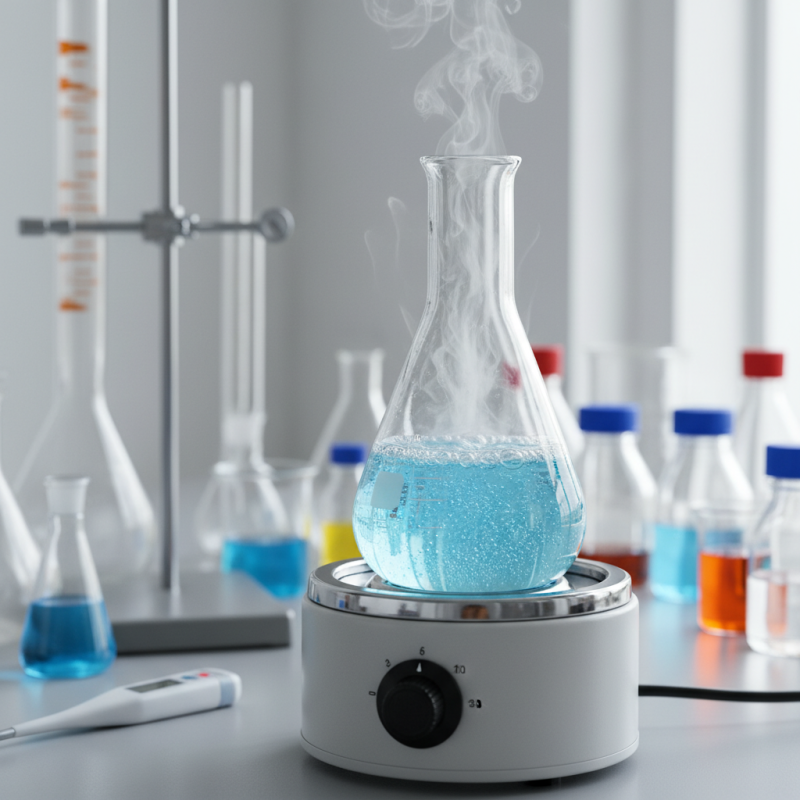
Choosing the Right Material for Boiling Flasks in Laboratories
When choosing a boiling flask for laboratory experiments, material selection is crucial. Common options include glass, borosilicate glass, and certain types of plastics. Each material has distinct advantages and limitations. For instance, borosilicate glass is favored for its thermal resistance. It withstands high temperatures without breaking. However, it can be brittle and requires careful handling.
Tips for choosing the right flask include considering the substance you will heat. Some materials release chemicals when exposed to high heat. Always check compatibility with your samples. For volatile liquids, closed systems or flasks with secure lids are necessary to prevent spills. Be mindful of the flask's size; a flask too small risks overflow, while one that’s too large may waste resources.
Additionally, ensure your boiling flask has an appropriate neck size for easy pouring and stirring. A wider neck can facilitate more efficient evaporation, while a narrow neck may better contain fumes. When using any flask, reflect on your lab practices. Learn from each experiment to improve future choices.
Factors to Consider for Size and Capacity of Boiling Flasks
Choosing the right boiling flask is crucial for successful experimentation. Size and capacity play significant roles in the effectiveness of your lab work. Boiling flasks come in various sizes, from small 100 mL capacities to larger ones exceeding 5 liters. The size impacts the volume of liquid and allows for different levels of reaction intensity. Too small a flask might lead to spills, while a flask that is too large may waste resources and space. Consider the nature of your experiments. If you are performing small-scale reactions, a smaller flask is beneficial. Conversely, larger flasks are ideal for extensive experiments requiring more materials. Pay attention to the thickness of the flask as well; thicker glass can withstand higher temperatures. It contributes not just to longevity, but also to the accuracy of your results.
While selecting, review past experiences with various flasks. Reflect on their performance in terms of heat distribution and ease of cleaning. Learning from previous mistakes can help refine your choice. Accurate measurements of the required capacity will reduce the chance of repeated experiments, thereby saving time and resources. The right boiling flask can greatly enhance your laboratory’s efficiency.
Essential Features for Efficient Lab Boiling Flask Design
When selecting a lab boiling flask, several essential features contribute to its efficiency. A well-designed flask should have a sturdy construction to withstand high temperatures. Look for materials that resist thermal shock and corrosion. Consider the flask's shape; a round-bottom design allows for better heat distribution.
Ensure the flask has a suitable neck size for easy pouring and evaporation control. Graduated markings on the side can help with accurate measurements. Tips for choosing the right flask include inspecting the seal for tightness. A loose seal can lead to vapor loss and affect results.
Additionally, consider the compatibility of the flask with different heat sources. Some flasks do not perform well with certain heating elements. Always assess your experimental needs to select the best design. Small details, like a stable base or a handle, can enhance usability. These factors play a pivotal role in achieving efficient experimentation outcomes.
Best Lab Boiling Flask for Efficient Experimentation Tips? - Essential Features for Efficient Lab Boiling Flask Design
| Feature | Description | Importance |
| Material | Borosilicate glass for high thermal resistance | High |
| Volume Capacity | Ranges from 100ml to 5000ml | Medium |
| Neck Size | Standardized sizes for easy connectivity | High |
| Heating Method | Compatible with mantle, hot plates, or vaporization | High |
| Shape | Round bottom for even heating | Medium |
| Thermal Shock Resistance | Ability to withstand sudden temperature changes | High |
| Purity Level | Non-reactive with most chemicals | High |
| Ease of Cleaning | Smooth inner surface for easy maintenance | Medium |
Safety Considerations When Using Boiling Flasks in Experiments
When working with boiling flasks, safety is paramount. These glass vessels can reach high temperatures, posing risks if mishandled. Always wear appropriate personal protective equipment (PPE). Goggles, gloves, and lab coats are essential. They provide a crucial first line of defense against spills or breakage.
Ensure your workspace is organized and free from clutter. An accident can occur in seconds. Hot liquids can easily spill, causing burns or injuries. Place your boiling flask securely on a heat-resistant surface. Avoid overfilling to minimize the risk of splashing. Use a proper heating method to maintain control over temperature adjustments.
Monitor your experiment closely. Be aware of the signs of overheating, and always have a safety plan. If you notice any signs of stress on the glass, like cracks, stop immediately. Regularly checking the equipment can prevent larger issues later. Reflection on these practices ensures a safer environment for experimentation.
Maintenance Tips to Prolong the Lifespan of Lab Boiling Flasks
Proper maintenance of lab boiling flasks is crucial for their longevity and efficiency. Regular cleaning is a fundamental practice. After each use, flasks should be washed thoroughly with appropriate solvents. According to a study by the American Chemical Society, neglecting this step can lead to contamination and decreased performance. Even minor residue can affect experimental results.
Temperature fluctuations can also shorten a flask's lifespan. Rapid heating or cooling can cause stress fractures. This can lead to leaks or failures during experiments. Experts suggest that users should gradually adjust temperatures over time. This approach significantly reduces the risk of damage.
Lastly, proper storage is essential. Flasks should be stored upright, away from heavy materials that could cause impacts. Keeping them in designated cabinets prevents accidental breakage. A report from the National Institute of Standards and Technology indicates that many lab accidents stem from improper storage. Overall, focusing on these maintenance tips ensures that boiling flasks remain reliable tools in any lab setup.