
7 Best Electric Nursing Beds for Global Buyers?

Choosing an electric nursing bed is a care decision, not merely a furniture purchase. For global buyers, comfort, safety, durability, and after-sales support must work together. A quiet motor helps at night. A stable frame supports safer transfers. Clear hand controls reduce confusion for patients and caregivers.

Dr. Bill Thomas, a physician and long-term-care innovator, often reminds care professionals, “Aging is not a disease.” That principle matters here. The best electric nursing bed should support independence without making the user feel institutionalized. Adjustable back and leg sections can improve positioning, meals, rest, and routine care. However, powered movement is not automatically better. Poor controls, weak side rails, or an unsuitable mattress can create new difficulties.

This guide examines seven leading options for international purchasers. It considers height range, weight capacity, motor performance, emergency lowering, caster quality, mattress compatibility, and cleaning access. It also reviews voltage requirements, replacement parts, warranty clarity, and regional service availability. Those details are easy to overlook.

They matter greatly.

A reliable bed should fit the room, the caregiver, and the user’s daily habits. Buyers should verify product documentation and local safety expectations before ordering. Specifications may vary between markets, even under the same model name. We also recognize a practical limitation: online descriptions cannot reveal every noise, vibration, or handling issue. Real user feedback remains valuable.

The following selections are not universal winners. Each electric nursing bed has strengths, compromises, and a suitable use case.
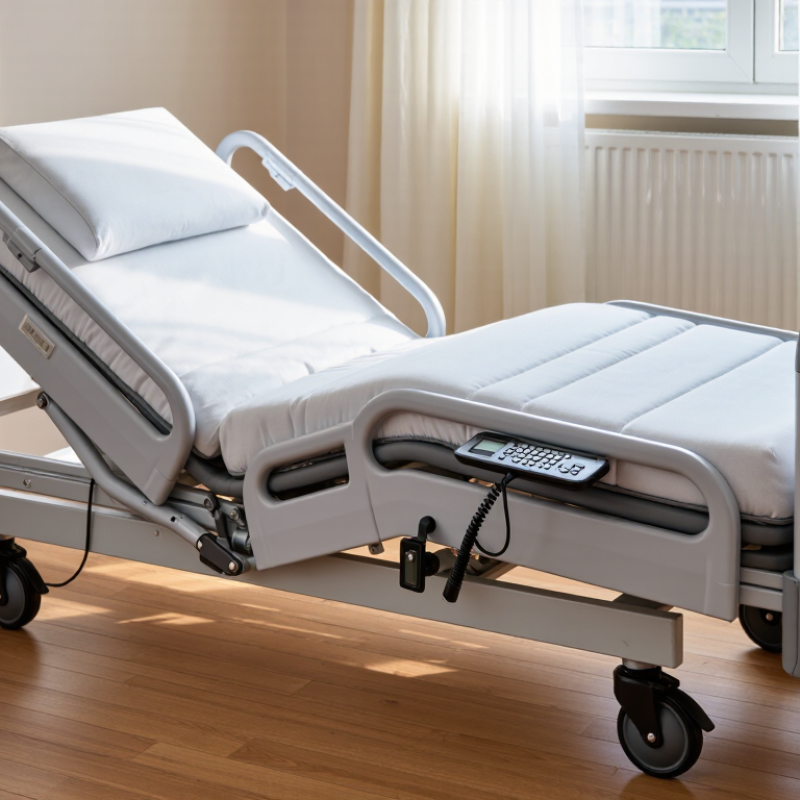
7 Best Electric Nursing Beds for Global Buyers?

Electric Nursing Beds: Key Features and Selection Criteria

Choosing an electric nursing bed requires more than counting motor functions. Consider the patient’s mobility, caregiver workload, room size, and local power supply. Adjustable height can reduce back strain during transfers. Back and leg elevation may improve comfort during meals, reading, or treatment. Check whether the lowest position helps prevent falls. Side rails should support repositioning without creating unnecessary gaps. A firm, breathable mattress surface also matters, especially for long-term use.

Reliable selection depends on measurable details. Ask for load capacity, adjustment range, noise level, battery backup, and cleaning instructions. Review electrical certifications accepted in the destination market. Confirm plug type, voltage, emergency lowering, and replacement-part availability. A clear warranty is useful, but response time matters more in daily care. In practical evaluations, controls should be simple enough for a tired caregiver to use safely. Some beds look advanced yet feel unstable when fully raised. That detail deserves honest attention.

Tips: Test every movement before purchase. Listen for unusual motor noise. Measure doorways and elevator entrances first. Request a demonstration video or inspection report. Compare the bed with the patient’s wheelchair height. Do not rely only on online photographs. A small mismatch in mattress size or rail height can create real inconvenience. Recheck the decision with a nurse, therapist, or trained equipment adviser.

The Seven Best Electric Nursing Beds for Global Buyers

The Seven Best Electric Nursing Beds for Global Buyers should be judged by care needs, not attractive features. A reliable bed usually offers independent backrest, knee, and height adjustment. These movements can reduce caregiver strain during transfers and daily hygiene. Look for a quiet motor and a clearly marked handset. Small details matter.

The seven strongest choices often include low-height beds, home-care beds, bariatric beds, pediatric designs, rehabilitation beds, intensive-care models, and beds with advanced positioning. Each type serves a different patient profile. A low bed may reduce injury risk during nighttime movement. A bariatric model needs verified weight capacity and a wider sleeping surface. Pediatric equipment requires stricter supervision and professional assessment. Side rails should protect without creating avoidable entrapment points.

Global buyers should check electrical voltage, plug configuration, spare-part access, and local medical-device requirements. Ask for load testing documents, cleaning instructions, warranty terms, and user training materials. A bed may meet one market’s expectations but fail another’s import or safety rules. Standards such as IEC 60601-2-52 can support evaluation, but they do not replace local compliance checks.

I would also test the emergency lowering function before purchase. It is easy to overlook. Battery backup deserves the same attention, especially where power interruptions are common. A perfect specification sheet still cannot reveal every problem in a real bedroom. Measure doorways, elevator space, and caregiver walking areas before placing an order.

Comparing Adjustability, Safety, Comfort, and Durability

For global buyers, the seven strongest electric nursing-bed choices differ by care setting: low-height, three-function, five-function, bariatric, pediatric, intensive-care, and home-care models. Adjustability matters first. Backrest, knee, and height controls should move smoothly, with readable labels and a backup manual release. The WHO and UNICEF Global Report on Assistive Technology estimates that more than 2.5 billion people need assistive products today. That demand makes simple controls essential.

Safety needs closer inspection. Check side-rail gaps, wheel locks, emergency lowering, and battery performance during power cuts. The FDA’s Hospital Bed System Dimensional and Assessment Guidance identifies entrapment as a serious bed-system hazard. IEC 60601-2-52 also sets safety requirements for medical beds. Rails should not become a cage. A low position may reduce fall impact, but only if caregivers can still transfer the user safely. Some sales comparisons overlook this conflict.

Comfort depends on mattress ventilation, pressure distribution, noise, and the user’s posture. Durability depends on frame welding, actuator cycles, corrosion resistance, and serviceable parts. The WHO Global Report on Assistive Technology notes that affordability and maintenance strongly affect long-term access. That is easy to underestimate. A cheaper bed may become expensive after repeated actuator failures, unavailable batteries, or imported spare parts. Buyers should request test records, warranty terms, cleaning instructions, and local service evidence. No bed is universally best; clinical needs, room dimensions, caregiver strength, and electrical standards can change the decision.

International Standards, Certifications, and Compatibility

Choosing among the 7 best electric nursing beds requires more than comparing motors, rails, and mattress platforms. International buyers should verify IEC 60601-1 electrical safety and IEC 60601-2-52 requirements for adult medical beds. These standards address insulation, leakage current, stability, entrapment risks, and mechanical strength. A bed may look compliant yet lack valid testing records.

Certification depends on the destination. A CE marking supports European market access when applicable, while other countries may require local registration, importer documentation, or electrical approvals. ISO 13485 indicates a medical-device quality system, and ISO 14971 supports structured risk management. Neither certificate proves every model is safe for every hospital. That distinction is often missed.

The World Health Organization and UNICEF reported in Global Report on Assistive Technology that more than 2.5 billion people need assistive products, with demand expected to exceed 3.5 billion by 2050. This growth makes compatibility practical, not cosmetic. Check voltage, frequency, plug type, emergency battery behavior, nurse-call sockets, mattress dimensions, and spare-part availability. Test the hand control with gloved hands. Small details matter.

Tips: Request recent test reports, declarations of conformity, and serial-number traceability. Ask whether the bed supports local voltage without an external transformer. Confirm side-rail dimensions against local safety guidance. Do not rely on translated certificates alone. Some documents are incomplete. That deserves a second review before purchase.

7 Best Electric Nursing Beds for Global Buyers? - International Standards, Certifications, and Compatibility
Rank Electric Nursing Bed Configuration Recommended Use Bed Platform Size Height Range Backrest / Legrest Adjustment Safe Working Load Electrical Compatibility Key International Standards to Verify Certification Evidence to Request Global-Buyer Advantages
1 Five-Function Hospital-Style Electric Bed Acute care, rehabilitation centers, and long-term-care facilities Approximately 900 × 2,000 mm Approximately 400–800 mm Backrest: approximately 0–70°
Legrest: approximately 0–40°
Trendelenburg and reverse Trendelenburg commonly available
Typically 200–250 kg, including mattress and accessories 100–240 V AC, 50/60 Hz input; confirm plug type, medical-grade power supply, leakage current, and battery backup IEC 60601-1 IEC 60601-2-52 IEC 60601-1-2 ISO 14971 Valid test reports from an accredited laboratory; applicable market conformity documentation; risk-management file summary; electrical-safety and EMC reports Broad clinical functionality, adjustable height, easier patient transfer, and strong suitability for international hospital projects
2 Low-Height Electric Nursing Bed Fall-risk reduction, geriatric care, dementia care, and home nursing Approximately 900 × 2,000 mm Approximately 250–650 mm Backrest: approximately 0–70°
Legrest: approximately 0–35°
Independent height adjustment
Typically 180–220 kg, including mattress and accessories 100–240 V AC, 50/60 Hz; verify battery operation, charging time, plug configuration, and standby power consumption IEC 60601-1 IEC 60601-2-52 IEC 60601-1-2 IEC 62366-1 Usability-engineering documentation, EMC test report, electrical-safety report, and evidence that the lowest position has been tested for stability Reduces the distance of a potential fall while preserving powered positioning and caregiver access
3 Heavy-Duty Bariatric Electric Bed Bariatric wards, specialist rehabilitation, and high-load home care Approximately 1,200 × 2,000 mm or wider Approximately 450–800 mm Backrest: approximately 0–65°
Legrest: approximately 0–35°
Reinforced deck and wider side-rail options
Typically 300–450 kg, including mattress and accessories 100–240 V AC, 50/60 Hz; confirm motor capacity, circuit protection, battery rating, and local socket compatibility IEC 60601-1 IEC 60601-2-52 IEC 60601-1-2 ISO 14971 Load and stability test results at the declared safe working load; structural test records; braking test; electrical and EMC reports Higher load capacity and wider sleeping surface; suitable where standard bed dimensions are insufficient
4 Three-Function Homecare Electric Bed Home recovery, chronic-care support, and private nursing facilities Approximately 900 × 2,000 mm Approximately 400–700 mm Backrest: approximately 0–70°
Legrest: approximately 0–35°
Height adjustment may be limited on entry-level configurations
Typically 160–200 kg, including mattress and accessories 100–240 V AC, 50/60 Hz; confirm detachable handset, battery backup, plug standard, and replacement power-supply availability IEC 60601-1 IEC 60601-2-52 IEC 60601-1-2 Declaration of conformity where applicable, electrical-safety report, EMC report, user manual, and service-parts documentation Lower cost and simpler maintenance while providing the most frequently used backrest, legrest, and height functions
5 Electric Bed with Integrated Scale Hospitals and care facilities requiring regular patient-weight monitoring Approximately 900 × 2,000 mm Approximately 400–800 mm Backrest: approximately 0–70°
Legrest: approximately 0–40°
Integrated weighing system with display or nurse-call integration
Typically 200–250 kg, including mattress and accessories 100–240 V AC, 50/60 Hz; verify scale calibration procedure, battery backup, data interface, and regional plug type IEC 60601-1 IEC 60601-2-52 IEC 60601-1-2 ISO 13485 Scale accuracy and calibration records; electrical and EMC reports; software documentation if data connectivity is included Reduces manual transfers to a separate scale and supports medication, nutrition, and fluid-management workflows
6 Electric Nursing Bed with Cardiac-Chair Position Respiratory care, cardiac recovery, dialysis support, and extended bedside treatment Approximately 900 × 2,000 mm Approximately 400–800 mm Backrest: approximately 0–70°
Legrest: approximately 0–40°
Chair-position or synchronized contouring function
Typically 200–250 kg, including mattress and accessories 100–240 V AC, 50/60 Hz; confirm actuator duty cycle, emergency battery function, plug standard, and power-failure return behavior IEC 60601-1 IEC 60601-2-52 IEC 60601-1-2 IEC 62366-1 Functional safety assessment, emergency-operation test, EMC report, usability records, and documentation for all powered positions Supports upright positioning, patient comfort, respiratory management, and easier bedside procedures
7 Compact Electric Nursing Bed for Small Rooms Urban apartments, small clinics, residential care, and limited-access rooms Approximately 850–900 × 1,900–2,000 mm Approximately 350–700 mm Backrest: approximately 0–65°
Legrest: approximately 0–35°
Compact frame with removable or folding components
Typically 150–200 kg, including mattress and accessories 100–240 V AC, 50/60 Hz; confirm transport dimensions, cable length, plug adapter requirements, and local replacement parts IEC 60601-1 IEC 60601-2-52 IEC 60601-1-2 Dimensional and stability test records, electrical-safety report, EMC report, assembly instructions, and local-language labeling Smaller footprint and easier delivery through narrow doors, elevators, and residential corridors
Buyer verification note: The specifications above represent commonly available configuration ranges rather than claims for a specific product. Before purchase, verify the exact model’s safe working load, mattress-platform dimensions, ingress protection rating, electrical input, plug type, battery performance, language labeling, local registration requirements, and conformity documentation for the destination market. IEC 60601-2-52 is specifically associated with the safety and essential performance of medical beds, while national market requirements may add further obligations.

How to Choose the Right Electric Nursing Bed for Different Care Needs

7 Best Electric Nursing Beds for Global Buyers?

Choosing an electric nursing bed starts with the person, not the product. Assess mobility, pressure-injury risk, breathing needs, and transfer ability. A low-height frame can reduce fall impact. Adjustable back and knee sections may improve comfort during meals or reading. Some users need a firm mattress. Others need pressure redistribution. Ask a qualified clinician to review these needs.

Measure the room, doorway, and lift before ordering. A bed that fits the room may not fit the elevator. Check the safe working load, mattress size, side-rail design, and emergency lowering function. Controls should have large buttons and clear symbols. A backup battery is useful during short power failures. However, battery performance varies with age and maintenance.

Global buyers should request safety documents, cleaning instructions, voltage details, and local service arrangements. Electrical requirements differ between countries. Confirm plug type and approved operating voltage. Caregivers should test the hand control and lockable casters before daily use. Noise also matters in shared bedrooms. A quiet motor supports better rest.

The cheapest option may become expensive when spare parts are unavailable. Ask about delivery damage procedures and technician response times. A bed can look excellent online yet feel unstable on uneven flooring. I would inspect it in person when possible. Specifications help, but real handling reveals problems. Reassess the bed after several weeks, because care needs can change.

7 Best Electric Nursing Beds for Global Buyers: Matching Bed Features to Care Needs

The chart uses a 1–5 planning score to show how strongly each feature is typically prioritized for different care needs. A higher score indicates greater importance when comparing electric nursing beds. Buyers should also verify local safety standards, safe working load, mattress compatibility, emergency lowering, and caregiver requirements before purchase.

Optimized by Optimole