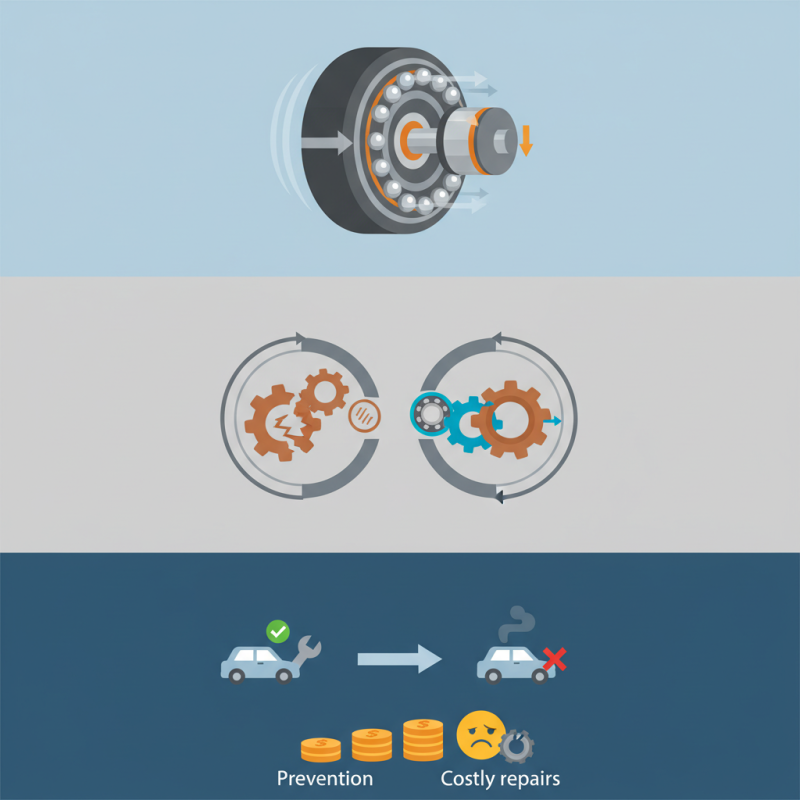
What is Auto Parts Bearings and How Do They Work?
Auto Parts Bearings play a critical role in vehicle performance. These components reduce friction and allow moving parts to function smoothly. Understanding how bearings work is essential for anyone interested in automotive engineering.
In a car, bearings are found in several places. They support rotating shafts and help wheels turn effortlessly. Without proper functioning bearings, vehicles can suffer significant wear and tear. This leads to reduced efficiency and potential breakdowns.
Many people overlook the importance of Auto Parts Bearings. They may not realize how these small components impact overall vehicle safety. Regular checks can prevent future problems. It’s easy to ignore, but that can cause costly repairs later. So, understanding their function is crucial for every car owner.
Definition of Auto Parts Bearings and Their Types
Auto parts bearings are crucial components in vehicles. They help reduce friction between moving parts. This process enhances performance and longevity. There are several types of auto parts bearings. Each type serves a specific purpose in various automotive applications.
Ball Bearings are common. They consist of balls that fit between two smooth surfaces. These bearings support high-speed rotation. Roller bearings, on the other hand, use cylindrical rollers. They distribute weight more evenly and are ideal for heavy loads. Lastly, thrust bearings manage forces that act along the axis. They are essential for components like clutches and transmissions.
Tips: Regularly inspect your bearings. Look for signs of wear or damage. Replacing worn bearings can prevent costly repairs later. Always use suitable tools for installation. Rushed work can lead to misalignment and failure.
Remember, not all bearings are the same. Different vehicles require specific types. Research or consult an expert before purchasing. Poor choices can lead to increased friction and reduced performance. Understanding these details is key to effective maintenance.
Auto Parts Bearings Usage in Various Vehicle Types
The bar chart above illustrates the percentage of auto parts bearings usage across various vehicle types, highlighting that passenger cars have the highest usage at 40%, followed by trucks and buses. Understanding the different applications helps in selecting the right bearings for specific automotive needs.
Functionality of Auto Parts Bearings in Automotive Applications
Auto parts bearings play a crucial role in automotive applications. They reduce friction between moving parts, allowing for smooth operation. By minimizing wear and tear, they extend the life of various components. According to a report by the global automotive bearings market, it is expected to grow at a compound annual growth rate (CAGR) of 6.5% from 2022 to 2030. This growth highlights the increasing importance of these components in modern vehicles.
Different types of bearings serve various functions. Ball bearings are commonly found in steering systems and engines. Roller bearings, on the other hand, are used for heavy loads in drive axles. They must endure harsh conditions, including extreme temperatures and vibrations. A study revealed that improper bearing maintenance can lead to failures, resulting in costly repairs. Interestingly, only 30% of vehicles are regularly checked for bearing issues, reflecting a gap in awareness.
Understanding the functionality of bearings is essential for automotive efficiency. They not only support the vehicle's weight but also improve fuel efficiency. The right choice of bearing can lead to a 10% improvement in energy consumption. However, choosing subpar bearings can lead to significant problems. In some cases, it has been noted that improper installation can cause a bearing failure rate of 20%. Constant vigilance is necessary to avoid these pitfalls.
Key Materials Used in the Manufacturing of Bearings
Auto parts bearings play a critical role in machinery. They reduce friction between moving parts, ensuring smooth operation. Various materials are used to manufacture these bearings, each with unique benefits.
Steel is often the primary material. It is durable and strong, capable of handling heavy loads. However, steel can corrode if not properly maintained. Stainless steel is another option. It resists rust and is suitable for humid environments. Yet, its higher cost may limit its use in some applications.
Ceramics are becoming popular for bearings. They are lightweight and have excellent wear resistance. These materials can withstand high temperatures too. Nonetheless, ceramics can be brittle and may break under stress. Plastics are also utilized in lightweight applications. They are cost-effective but may lack the durability of metals. Each material has its strengths and weaknesses, requiring careful consideration for specific tasks.
What is Auto Parts Bearings and How Do They Work? | Material | Properties | Common Applications |
| Steel | High strength, durability, and resistance to wear | Automotive, industrial machinery |
| Ceramic | Low friction, corrosion resistance, and lightweight | High-performance cars, aerospace |
| Plastic | Lightweight, resistant to corrosion, and low noise | Electrical appliances, bicycles |
| Bronze | Good machinability and wear resistance | Marine applications, heavy machinery |
How to Maintain and Replace Auto Parts Bearings
Auto parts bearings play a crucial role in vehicle performance. These components reduce friction between moving parts, ensuring smooth operation. Regular maintenance is vital for their longevity. According to industry reports, about 30% of all vehicle breakdowns stem from bearing failure. Thus, understanding how to care for and replace them is essential.
To maintain bearings, perform routine inspections. Check for unusual noises or vibrations. Greasing the bearings at recommended intervals can significantly enhance their lifespan. Research indicates that proper lubrication can reduce wear by up to 50%. In addition, replace bearings at the first sign of damage. Ignoring early signs can lead to costly repairs and replacements later.
Replacement is straightforward but requires attention. Always clean the housing before installing new bearings. Ensure they are seated correctly. Neglecting these details could lead to improper alignment, causing further issues. Be mindful that the choice of lubrication during replacement also matters. Using the wrong type can shorten their service life.
Common Problems and Solutions Related to Auto Parts Bearings
Auto parts bearings play a crucial role in vehicle performance. These essential components help reduce friction between moving parts. However, they can also face common issues that affect functionality and safety.
One prevalent problem is wear and tear. Bearings can deteriorate due to constant movement and pressure. This can lead to noise, vibrations, or even overheating. When this happens, it’s crucial to inspect and replace the affected bearings promptly. Ignoring these signs can lead to more significant damage and costly repairs.
Another issue is contamination. Dust and debris can enter the bearing assembly, leading to premature failure. Using appropriate seals can help prevent this problem. Regular cleaning and maintenance are vital. They can prolong the lifespan of bearings and ensure smooth operation. While these solutions seem simple, many overlook them, leading to frequent vehicle issues.