2026 Top UV Flatbed Printer Features Buyers Must Know?
In the fast-evolving world of printing technology, understanding the UV Flatbed Printer features is vital for potential buyers. These printers offer unparalleled versatility, but not all models are created equal. As we delve into the landscape of 2026, it's crucial to recognize what truly sets the best UV Flatbed Printers apart.
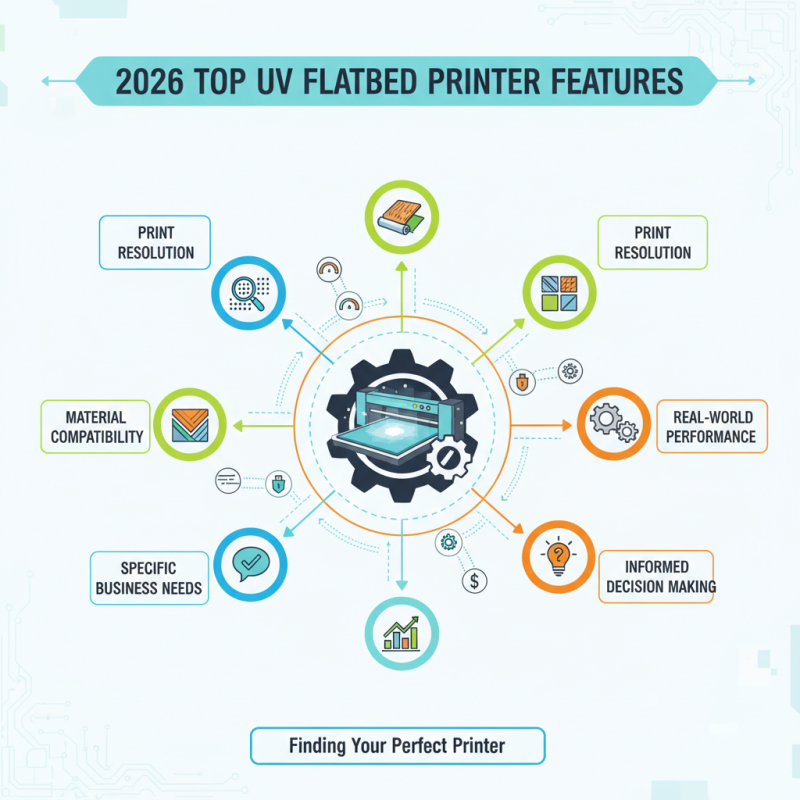
Many factors come into play, from print resolution to material compatibility. Buyers often overlook the nuances that can impact their investment. The right UV Flatbed Printer should match specific business needs and applications. It's easy to get swept up in specifications, but real-world performance should be the focus.
As you explore these features, remember that not every choice will yield the desired outcome. Reflect on your own requirements and the unique challenges your business faces. Making a well-informed decision demands careful consideration, and understanding these features will empower you to find the perfect UV Flatbed Printer for your needs.
Key Features of UV Flatbed Printers for 2026 Buyers
When considering a UV flatbed printer for 2026, buyers should focus on several key features that will affect performance and output quality. A critical aspect is the print resolution. Many advanced models now offer resolutions of up to 1,200 dpi, ensuring crisp and vibrant images. This level of detail can significantly enhance product appeal in competitive markets, as demonstrated by studies indicating that higher resolution prints can increase customer engagement by up to 30%.
Another essential feature is versatility in media handling. The ability to print on various substrates, including wood, metal, and glass, is increasingly important. Recent reports from industry analysts highlight that nearly 40% of buyers prioritize multi-surface printing capability. Buyers looking for flexibility should assess the printer's compatibility with diverse materials and thicknesses.
Buyers must also consider the durability of inks used in UV flatbed printers. Inks that offer scratch resistance and UV stability show reliability in long-term applications. Studies suggest that printers using superior ink formulations can enhance product lifespan by 25%, reducing the need for reprints. As the market evolves, embracing these features can lead to better investment decisions. However, assessing these specifications requires careful reflection and consideration of long-term needs.
Understanding the Advantages of UV Printing Technology
UV printing technology offers significant advantages for various industries. One primary benefit is its versatility. Artists and businesses can print on a wide range of materials, from wood to metal and even glass. This flexibility opens up creative possibilities. UV printers work well with different textures and surfaces.
Durability is another key feature. UV prints are resistant to scratches, fading, and moisture. This makes them suitable for both indoor and outdoor applications. For instance, signage that endures sunlight remains vibrant. However, achieving the perfect balance between speed and quality can be challenging. Users must often adjust settings for different materials, which may lead to inconsistency.
Additionally, UV printing is environmentally friendly. The technology uses UV light to cure inks as they are printed. This reduces waste and volatile organic compounds. Yet, users need to be cautious about ink adhesion on certain surfaces. Not all materials yield the same results. Understanding these nuances is crucial for optimal outcomes.
Essential Specifications to Consider When Choosing a UV Flatbed Printer
When selecting a UV flatbed printer, understanding essential specifications is crucial. One key factor is print resolution. High-resolution printers offer sharp, vibrant images, which are vital for detailed work. Most printers support various resolutions, affecting both speed and quality. You’ll want to balance these to fit your projects.
The ink type used in UV printers also plays a significant role. Different inks behave uniquely under UV light. Some provide better adhesion on non-porous surfaces. Others may be more environmentally friendly. Knowing your project's materials helps make the right choice. Consider testing samples to gauge performance.
Another important aspect is the machine's size and versatility. Ensure the printer can handle your typical media dimensions. Some models may be too limited for larger jobs. Evaluate the ease of switching between materials. This can reflect on your workflow efficiency. A machine that fits your specific needs can drastically change your output.
Comparison of Leading Brands and Models in the UV Flatbed Market
The UV flatbed printer market is growing rapidly. In 2023, it reached approximately $1.5 billion and is projected to expand at a CAGR of 10% through 2026. This growth is fueled by advances in technology, such as improved curing systems and versatile printing options. Many buyers are focused on key features while comparing leading brands and models.
One must consider the print quality. Top models often offer resolutions up to 1200 dpi, ensuring vibrant images. Additionally, versatility is vital. Many printers can handle various substrates, including wood, glass, and metal. A recent survey indicated that nearly 70% of buyers prioritize substrate versatility. Buyers also seek user-friendly interfaces that facilitate the printing process. An intuitive design can boost productivity and reduce training time.
Price remains a critical factor. While high-end models boast superior features, budget-friendly options exist. However, cheaper models may compromise print speed and durability. Manufacturers report that around 30% of users face operational challenges with lower-tier models. This inconsistency can lead to significant operational delays, reducing overall efficiency. Buyers should weigh these factors carefully, as the right choice directly impacts the return on investment.
2026 Top UV Flatbed Printer Features Buyers Must Know
| Feature | Model A | Model B | Model C |
| Print Area (inches) | 48 x 96 | 60 x 120 | 50 x 80 |
| Maximum Resolution | 1200 dpi | 1440 dpi | 1200 dpi |
| Print Speed (sq ft/hr) | 150 | 200 | 175 |
| UV Light Type | LED | Mercury Vapor | LED |
| Material Compatibility | Wood, Glass | Plastic, Metal | Fabric, Cardboard |
| Price Range ($) | $25,000 - $30,000 | $35,000 - $45,000 | $30,000 - $35,000 |
Maintenance and Support Considerations for UV Flatbed Printers
Maintaining UV flatbed printers is crucial. Regular check-ups can prevent major breakdowns. Many users overlook routine maintenance, which is a mistake. Dust accumulation can hinder print quality. Clean the print heads and absorbent pads often. Neglecting these tasks can lead to costly repairs.
Support for these printers is essential for efficiency. Manufacturers should offer robust technical support. A responsive support team can resolve issues quickly. Users need to understand warranty details. Some warranties cover service, while others don’t. Read the fine print carefully.
Training is another often ignored aspect. Proper user training enhances the printer's lifespan. Misunderstanding software can result in improper usage. Invest time in learning the system. Ignoring this can lead to frustration. Every detail matters for maintaining performance.